


Join Pastors Clint Loveall and Michael Gewecke as they continue a new Lenten series exploring the Enneagram on the Pastor Talk Podcast. Find more information on our website at fpcspiritlake.org/enneagram.
NEW: You can watch this Pastor Talk podcast episode via video! Click here to watch it now.
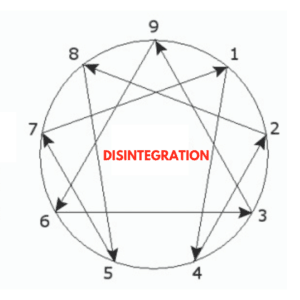
In this episode of the Pastor Talk podcast, Pastors Clint and Michael discuss how the Enneagram frames our ability to move from our own number towards other numbers during times of stress and personal challenge. Understanding how we respond to times of crisis and stress can be critical as we make our way forward to more fulfilling lives.
Resources:
Hey, welcome back to the Pastor Talk podcast,
The Visual Edition, as we make our way through strange times
and do our best to continue with life somewhat as normal.
We’ve been working through the Enneagram.
And so today we continue, Michael,
with the idea of movement,
the idea that within our type,
if we’re getting to that point where maybe I’m
feeling comfortable with a number,
maybe I’m beginning to think I identify as something,
that I can complicate it even further with the idea
that I can move within that type,
not just the wings
that we’ve talked about,
but I can literally
go across the Enneagram, in some cases,
for better or worse.
Right.
We talked about this in the beginning
when we said that one shouldn’t think of the Enneagram
as a static personality definition.
It’s not something that says,
this is who you are
and who you will be.
It’s rather,
this is the kind of shared experience
that you have with others in your type.
And if you are in a good place,
you’re going to tend in this direction.
In a place of healthiness,
you’re going to move this way.
In a place of less healthiness, of stress,
and of a particular struggle,
you’re going to go in this opposite direction.
And I think, Clint,
Enneagram teachers talk about that as a dashboard.
It’s a way that you can be aware of how you’re doing.
Because if you’re in the midst of a difficult situation
and you start behaving in these kind of negative ways,
that can throw up a flag for you and say,
I need to dial in.
I might not be in a healthy place right now.
Yeah, it’s a fascinating idea that each type has
some nuances to it, some individual characteristics.
And that from our own type,
we can, for better or worse,
mirror some of those things that either help us or hurt us,
depending on where we start.
So being more active, like a seven,
might be helpful if that’s the balance.
But if I’m already a type that tends
to run away from something, that’s less healthy.
And so the circularity of this,
the wholeness of this,
the interconnectedness of it,
I think, is really interesting.
In my mind, Michael,
it seems to me,
from a personal experience at least,
that our negative movements tend to be more instinctual.
In other words,
we never try to go downhill.
We just naturally do.
Our positive movement takes a little more self-awareness
and some effort.
You think that’s fair from an Enneagram perspective? Yeah, I do think that’s fair.
There’s a ironic twist here, right?
That the number that you might go to in a negative space
is the positive number that somebody else might go to.
And so I do think we should reflect on the fact that our ruts,
the ways in which we tend to not be healthy
in our number, that does generally tend to be
when we’re on autopilot.
I think when we’re going in the direction of health,
that often looks like us practicing self-awareness.
It often looks like us practicing habits
that get us out of our ruts.
So to say that one is a little bit more instinctual,
the other is a little bit more active,
I think that’s completely fair.
Yeah, absolutely. So it seems to me that the benefit
of a conversation like this is the idea
that it gives us some warning signals.
If we’re of a certain type,
and we can with some degree of self-awareness
look at ourselves and say,
I do think that I tend to do this or that.
And if we see those behaviors of another type
sort of popping up in our own life,
they can be for us a kind of warning sign
that hey, maybe things are a little stressful right now.
This is certainly a time culturally
where people are feeling crunched
and there’s lots of anxiety and uncertainty.
And I think the Enneagram helps us here
by giving us some things to look for,
some sort of flashing signs on the road
that hey, this might not be the direction you wanna go. Yeah,
if this was a project we were doing
on literally any other Lenten study year,
this may have a completely different landing
than it does this year.
And to be honest,
the negative types might be getting crushed right now.
So it’s worth knowing if this resonates with you
and you say, oh yeah, I’m living into my negative self at this moment.
This isn’t so much a place of condemnation.
It’s not to say,
woe is you, you’re doing badly.
It’s rather to say,
okay,
I can now see that is true.
And then you open yourself in a prayerful posture to say, God,
help me live into the better self
you created me to be. Yeah, the unfortunate truth is that the path
to any self-improvement begins with difficulty.
It begins with confession.
This is certainly the right time of the year
to talk about that.
It begins with admission of facing some
of the difficult truths that we’d rather not.
That’s how the Enneagram offers us wholeness.
And we went back and forth with whether to start here
with what the Enneagram calls disintegration.
But I really think it makes the most sense
because it’s the place we most want to avoid.
And so what we’ll do is just work our way through the types
and we’ll talk about for each type,
where is the place you go in unhealthy moments
and how are those signals a warning for you
to be aware and be on the lookout
for that kind of negative movement in your own life.
So maybe this will be more available,
more interesting from a practical standpoint, more accessible.
So let’s begin with type one,
type one, the reformer.
When type ones are struggling with health,
they move toward four.
And this makes sense,
I think, if you think it through.
Stressed ones can begin to live in fantasy.
They can begin to daydream.
They can increasingly remove themselves from their own life
because of the pressures they put on themselves.
And they can, like the four,
escape into that melancholy,
that sadness,
that sense of being overwhelmed.
And when a one is feeling overwhelmed,
they tend to move that direction. I don’t know if you would agree with this,
Clint.
I sometimes think of the one with the metaphor
of the pressure cooker.
And what I mean by that is I think they live
with such a high idea of what the perfect life is,
that every time they do something
or they experience something or have a relational moment that is negative,
it just adds to this continued growth
of discontent with the world.
And of course, the one’s core sin is anger.
And so this idea that it’s pressure cooking inside them.
And at some point,
you’ve gotta let off that pressure.
And so you’re either gonna explode in some sort of big
and present and visible moment,
or potentially you slip into this four’s melancholy.
You slip into this way of being in the world
which is dark and rainy and dreary.
And for you,
the way that you keep that pressure down
is you just continue to sort of live in that gray space. Absolutely,
and the one internalizes that idea
that no one except me quite gets it.
No one else quite understands that pressure
and the importance of doing things right.
And so when they embody that sort of personal sadness of the four,
it becomes nobody gets me.
Nobody understands me.
They begin to envy the lives of other people.
They begin to feel isolated.
And all of that frustration they have felt really tied
to tasks becomes personal now.
And they embody that woundedness of the four
from a different place,
but that’s a very much a red flag for a one.
That sense of I’m alone here.
Nobody understands me.
Nobody else is like me.
That’s not a good sign for a one. And you can just hear the one, right?
Wouldn’t it be great?
Wouldn’t it be absolutely great
if I could live a nice,
simple life like the rest of you screw-ups?
All of you people who don’t throw away your trash
in the right place,
who don’t buy the right thing
at Walmart, the right brand of salsa,
if I could just be like you people and not care,
wouldn’t life be great?
There’s a kind of angry envy
that you can just see boiling up from that
that comes from a heart that is wounded.
And so that self-discipline of the one
really becomes a kind of self-pity
or even a self-indulgence.
So talk about the warning signs.
How does a one begin to encounter the idea
that maybe they’re feeling that pressure
and making that slide? Right, so flexibility is gonna be hard for one
in even the best circumstances
because when you live up to ideals,
life does not often conform to those ideals.
So flexibility in the best of circumstances
is gonna be tough.
It’s gonna be extremely difficult
in more challenging circumstances.
So a one is gonna struggle with inflexibility.
They’re gonna have a really hard time changing plans.
They’re gonna have a really time being gracious
when others do something that they didn’t expect.
One’s going to be tempted to turn that gaze
that they are tempted to play outward
that other people don’t conform to my expectations.
An unhealthy one’s gonna have that turn back against them
in a form of self-judgmentalism,
that I don’t meet plano standards.
I’m a failure.
Sort of that fours tendency to become really hard
on that piece of yourself that’s lacking.
To a one who’s unable to keep their idea of perfect,
they’re in danger of making that final verdict against themselves.
I’m worthless.
I have no value.
I have no meaning.
And I’m unable to live up to the standard
that I can see so clearly.
And so that becomes this,
once again,
judgmental image turned inward.
And I think we see that in all of these movements, Michael.
Somehow the traits of our disintegration number
reinforce and really almost exacerbate our own tendency.
So the one is going to struggle with self-righteousness
in a general sense.
But at a non-healthy level,
they become just convinced of their own rightness.
Everyone else is wrong.
The one is always going to have that sense of anger,
but in their disintegration, as they struggle,
that’s gonna blow up,
as you said, the pressure cooker.
That’s gonna explode on people in ways
that are not characteristic,
but as they lose that sense of control
that hangs over them, generally speaking,
that you’re gonna see those things. Yeah, and wouldn’t you say, Clint,
that lots of ones,
when that explosion happens,
they not only hurt the people around them,
but often they surprise them.
People don’t see that coming.
Oh, that doesn’t seem like you.
Your always ordered stuff is always put together.
It seems like you have this figured out.
And then suddenly the one just explodes
with a kind of manic judgmentalism and anger.
And you see underneath that,
that’s what’s been kept under pressure the whole time.
It’s just now,
because of this disintegration,
because of the challenge that’s being experienced in this moment,
it was one more straw
than what the candle could carry,
and it broke the back. Right, so if you’re a one
and you’re feeling some of these things,
I think it’s especially important
for you to reflect on that situation for you.
What are some of the stresses causing that?
How might you deal with them in other ways?
The next podcast we put out
will be some of the moves toward positive.
That would be great to listen to that,
and to get a sense of how do we balance some of that side,
and instead of moving toward our negative self,
begin to move more toward wholeness.
And that’s, you know, it’s a struggle for everyone.
Ones can really wrestle with that. Yeah, and to maybe just interject at this point in the conversation,
Clint, this is maybe something we should have said
before we began with the numbers specifically,
is one of the great gifts of thinking
about disintegration for the one,
but also for all of the numbers, really,
is the fact that it will be a reminder to you
that you’re not alone.
In other words, your sin, if you’re a one,
or if you’re any other number in this disintegrated place,
your sin isn’t yours alone.
That’s not an unhealthy place only for you.
There’s other ones who are struggling with inflexibility
and trying to keep in the anger,
and there’s some gracious gift in being reminded,
you’re one among many.
You can say, “I’m a one, and this is my stuff right now,”
and you can hold that a little bit looser,
laugh at yourself and say,
“Okay, maybe we can eat at Dairy Queen
instead of A&W tonight.
It’s gonna be fine.
I’m just being a one right now.”
And there’s really, even in the disassociation,
that disintegrative moment, there’s still a grace even in that. Yeah, absolutely.
So bottom line, I think for the one,
if you happen to be a one and you find yourself feeling
that these ideas and ideals that you hold onto,
these things that you’re knocking yourself out for,
this rightness that you inherently kind of know
and work to protect and promote is failing you.
Like maybe it’s wrong.
Maybe it’s all an illusion.
Maybe all of this effort and energy you’re putting
into maintaining order and rightness in the world
isn’t really right.
That’s a warning bell for a one.
You need to move back to the center of trusting yourself, trusting those things.
And I think that’s an experience that is very much
for a one, an indicator that there’s a little imbalance happening. Absolutely. So our next type,
type two, this is an interesting move,
I think, in the way that many of these are type twos,
when they struggle with themselves,
they slide to some of the aspects of an eight,
which is an interesting pairing.
Stressed twos begin to lose that sense of compassion
that they naturally have for people.
And they may find themselves becoming more blunt,
more forceful,
that sort of anxiety that they feel generally speaking,
and that score keeping they do
begins to leave their internal conversation
and it begins to spill out on the others around them.
And they often have this sense that they’ve been wronged.
And while twos generally carry that,
in disintegration, they begin to attack those
they feel have wronged them. Yeah, so one of the descriptors of the eight
is how they are high energy,
fill the room kind of people.
And so when you’ve got a two,
they’re the ones who’ve been really maintaining
all these social connections.
And like you said,
Clint, internally they’ve been keeping score.
Now we’re getting to a breaking point.
The scorecard has gone beyond
what you can just stuff in anymore.
And suddenly the two finds themselves
living more into that eight who’s going to stand up,
they’re gonna square their shoulders
and they’re gonna challenge.
They’re going to call people to account
for a thing that they had only thought of before
but are now gonna act on.
And the thing that they share with the eight
is that willingness to engage, maybe even aggressively.
But what may be unique is the deep pride that the two has.
This idea that I’ve been helping you because you need it.
And then when they feel rejected,
they’re in a place in which they are unhealthy themselves.
They then count that against the people.
So it’s not only that I was helping you,
it’s that you’re ungrateful for it
and that I’m going to aggressively come after you with that. Right,
whereas for the eight,
that’s kind of an innate mechanism.
For the two, they get there with this sense
that they’ve been betrayed.
All these people they care about don’t care about them
or have abused them or have taken advantage of them in some way.
And they begin to lash out in anger,
in retribution of some sense.
And so for an eight,
the red flag is this idea that,
I think two’s, I’m sorry, for two’s,
I think one of the primary struggles is,
and we all have it to some extent, but admitting wrong.
Because two’s live through their connections,
they have this deep aversion to being wrong.
And so when a two absolutely cannot admit
that they have been in the wrong
or that they have been selfish
or that they have tried to work the system and manipulate people,
if they are unable to face those truths,
that is not a good sign for them.
They don’t find themselves in a good place. Yeah, and I think a two will have a sense
for that problem that they’re in
if they live on either side of the extremes
on a relational bell curve.
And this is what I mean.
If you’ve got a bell curve with a nice slope
up on both sides,
if you’re on this side of the bell curve
and you are too unattached to people,
if you have as a two created a very distinct separation
of relationship for two,
that’s an unnatural state.
Two’s naturally look for relationships.
So if you have severed those relational ties,
if you’re not talking to someone,
if you’re avoiding someone in the grocery store,
if you even raise up your voice and yell at somebody,
you’re on the disconnected side of relationship.
You’re not in a healthy place for a two.
If on the other hand,
you are clinging to people,
you’re pulling them in,
you’re using them to try to get them to do things for you
and to push you forward in life.
Now you’re on the other side of that relational bell curve.
That’s another sign to a two.
I’m manipulating relationships and people at this point.
And if you are either severely detached or overattached,
those are signs to the two
that I need to double check my soul.
How am I doing? Yeah, is it fair to say that that move from two to eight
is essentially the move from the tendency
to be passive aggressive to full on aggressive.
And so warning signs for the two,
that sense of entitlement,
aggression,
being inappropriate in relationships,
or maybe even pursuing inappropriate relationships
is one of the things that Enneagram people point out
that twos when they’re not healthy sometimes do. I think if you’ve got a two,
it’s a little bit,
at least from the limited amount,
I understand this, it’s a little bit like you take your engine
and you put a little bit of eight’s nitro in it
and you just blow that engine up
with the energy that comes from being an eight. Move on to type three.
Type threes in disintegration or in moments of struggle move to nine.
And essentially this is what happens when a three who,
you know, is pretty energetic,
pretty driven,
really out there trying to get it done.
When they kind of hit the wall,
they embrace that kind of avoidance,
that kind of lethargy apathy of a nine.
They just kind of throw up their hands and say, I’m done.
I’ve had enough, it’s not really working.
Maybe some of these goals I’m chasing aren’t even worth it,
but they just jump into nine.
And maybe in some ways,
this is the easiest transition to see,
I’m not sure. Oh, absolutely.
I would say, so if you want a couple
of really concrete examples,
you know a three is not in a healthy place.
They’re disintegrating.
If one, they come to work in their stretchy pants.
Two, they’re in a meeting and they don’t say anything.
They just sort of sit back at the edge of the room.
You know the three is not very healthy.
When you say, hey, what do you think about this?
And they say, I don’t know.
All of those are signs that a three is moving
to the negative side of their number.
Because at this point,
they are living into their fear
that they aren’t a person,
that they don’t have an opinion,
that they can’t exert identity in the world.
To a three,
when you get to a point of stress,
and when you become overwhelmed,
and your ability to be successful,
and efficient,
and pleasing, is no longer an idea that you can hold to.
The three’s just gonna end up backing out of the room,
putting their head down,
and honestly being ashamed,
ashamed of themselves. Absolutely, and in those moments,
that idea that the nine embodies of just blending in,
of being under the radar,
and really kind of being invisible,
become very attractive to a three.
Who gets a chance to hide from this idea
that some of this stuff isn’t taking me
where I thought that it would.
You know,
that success that they have been working on
is perhaps meaningless.
And when you get threes avoiding those moments,
that’s not a good sign for them.
You know, sometimes it suggests that a three
will even avoid major tasks,
and just instead take on small tasks
that they know they can do.
Essentially, they can do mindlessly,
they can do effortlessly,
but it’s very uncharacteristic for a three
to gravitate to those things,
and it’s not generally a good sign. No, no, not at all.
It’s a red flag when a three decides
that the success they’ve been pursuing is meaningless,
when they essentially say to themself
that they are failing,
that they’re a fraud,
that the game is already decided.
That’s a warning sign to the three
that you are now,
you’re on the edge of your healthy space. Yeah, so let’s talk about some other three warning signs.
Exhaustion,
threes are prone to workaholism,
and when they get to the point
that they just don’t have the energy,
they lose that drive, that’s not good.
Threes are generally,
well, this is a tricky one,
’cause threes can sometimes be deceptive,
but they’re generally not dishonest.
So when a three moves into a pattern of outright dishonesty,
when they’re telling lies to get out of things,
I can’t come to work today,
I don’t feel well.
When they just don’t want to,
when a three begins to embody that kind of dishonesty,
that’s very unhealthy for them.
That conscious deception is not generally
a part of what they do.
A feeling of emptiness,
a feeling of jealousy,
and to some extent,
as we discussed with ones,
they can be prone to lash out,
though I think rarely,
or maybe that’s fairly far down the road, at least,
for a three. Yeah, I would say one author said,
and I think it makes a great deal of sense,
one of the significant and very serious warning signs
for a three is the kind of depression that doesn’t wane
when a three gets to a place and says,
“I’m unable to achieve who I think I should be,
“and I am incapable.”
They are now at the nexus of affirming
what they fear is true about themselves,
and that is that they have no identity.
So an incredibly depressed three is in danger
of taking their own life because they are sitting
at the crossroads of who they think they are,
which is worthless, emptiness. Yeah, that guts them at the very core of their identity. That’s extreme,
that’s far down the road,
but that is a place that is dangerous for threes to be. Sure, so let’s move on.
Then Michael, type four, type four goes to type two,
and I think this is,
to me, this feels like a volatile combination.
Stress,
fours,
try to force relationships.
They try too hard,
you know, a four wants connection,
but they struggle with that sense
that they’re just not lovable,
and so as they find themselves moving
in an unhealthy direction,
they desperately try to facilitate
that sense of connection with others.
Like twos,
who are naturally relational,
fours want to emulate that,
but it doesn’t come naturally to them.
It comes from a broken place,
not an instinctive place. Right, ’cause remember,
four’s natural instinct is to be unique.
They’re living out of this idea that they have,
that there’s something different about them.
So the moment fours start trying to fill that hole
within themselves with other people,
they try to shove people into that hole,
fours are not gonna be in a healthy place, because remember,
fours tend to look down on everybody else
as being unthoughtful, as being relatively out of touch with reality.
So when a four starts trying to fill their holes
with other people who they tend to look down on anyways,
you know you’re not in a healthy space. Yeah, when a four begins to be needy,
begins to be demanding of others,
begins to give up some of their identity,
they pride themselves in that uniqueness,
and when they begin to give that up
to go along with others in relationship or in groups,
and this is especially dangerous in close relationships.
If a four begins to just give up who they are
in the idea of keeping someone else happy,
you begin to be very concerned about abuse
and misuse of trust,
and some of those really tough relational spots
that a four, an unhealthy four could find themselves in. Yeah,
fours are always in constant danger, I think,
of coming to a place where they have pushed
the people they love away from themselves,
and simultaneously they’ve smothered them
by pulling them in,
and when a four is in that situation,
they need to be thinking,
why is it that I feel compelled right now
to draw people into my circle,
to force people to compliment me,
to find ways to get people to say nice things?
Because for a four who’s in a really challenging situation,
that may be them trying to compensate
for this feeling that they are broken,
that there is this part about them
that is full of envy for the carefreeness
that other people have,
and so they’re trying to extract those things
they feel like they’re missing from other people,
using the relational tools that the twos use for good,
but now the four is using it in a negative way. Yeah, and you may see that in some practical ways,
they may start borrowing from people,
they may become increasingly indebted to people
financially, relationally,
they’ll disconnect from others,
they may experience a sense of alienation,
but they will increasingly lean on other people
or at least use the lack of other people
to drive them further into this deep sadness,
and I would say at that point,
the general term of melancholy,
which often applies to a four,
is no longer valid,
you have to use stronger language,
you have to use language about depression,
and maybe even self-loathing,
but the four begins to explore
some of the really dark avenues of their natural tendencies.
Fours are by nature people who are more comfortable
exploring the darkness of human existence,
unhealthy fours are going to places
that are very dark chasms of the human soul,
and so I do think you’re gonna find
that fours who are finding themselves in that place
are going to be relationally unstable,
both in terms of over-attachment to others
and under-attachment to others,
I think they are going to live out of this sense
of deep inner volatility,
this idea that there’s this thing burning within them
that they can’t describe,
they’re gonna be tempted,
like you said, towards self-destructive behavior.
That may or may not be physical,
it may be unhealthy use of relationship.
One author talked about how fours can be especially
sexually promiscuous in moments of darkness
because for them that’s a way of trying to capture
a relational validation,
but it may also just simply be
that fours don’t take care of themselves.
They abuse their body with being slothful
by eating bad food,
by not doing the stuff
that they need to do,
because it’s living out of this dark place
where they’re able to go by nature
of their own experience of the world. Great. – Yeah.
So, next we see type five.
Michael, I think this one is really interesting.
This is maybe the most clear case of opposites attract
on the Enneagram.
The unhealthy five goes to seven.
Remember the five is the investigator,
the seven is kind of the explorer or the escapist.
In some ways this makes no sense,
but behind it, it makes a lot of sense.
When the five becomes exhausted with the quest
to know things and investigate,
they give up and they instead begin to channel
that energy in shallow pursuits,
in the idea of just staying busy.
They sort of adopt that seven approach to things,
protect myself by never stopping long enough
to have to think.
The fives get there from a different place
and they bring a different nuance to it,
but it’s very interesting that that’s where they go
when they’re not doing well. This is critical that you understand
that the seven’s activity is not based
in some instinctive place,
it’s based in their mind,
because this is the connection to the five.
The fives are observant, perceptive people,
and the fives too live out of this cerebral space.
So for them, they can apply that thinking organ perfectly
towards the avoidance of thinking.
They can engage all of their faculties in avoidance
and towards creating both relational
and experiential moments in which the five
can then disengage from the stuff
that naturally matters to them.
And so in doing so,
they start to really unwind
the stuff that really matters.
And that brings with it its own kind of guilt,
its own kind of frustration,
but when the five starts using their mind to avoid,
now they’re gonna find themselves in that unhealthy place. One of the authors talked about fives almost in unhealth,
living secret lives.
They will be out on the side doing things
that are very uncharacteristic of them,
that their family and friends would be surprised by,
whether that’s strip clubs
or whether that’s community things
or online communities or social gatherings,
but they will throw themselves into some things
that are very different than their normal life,
and they’ll do so without people knowing.
So the secrecy becomes an issue,
and fives are prone to secrecy a little bit anyway,
that idea of withholding things, withholding self,
and so that becomes very problematic for the five.
The red flag for the five,
the thing that gets them there is this idea
that I’ll never find my place.
Fives are, they treasure information and knowledge,
they have a sense that they don’t fit in,
and when a five gets unhealthy,
they essentially give up.
They think, I don’t have a place,
I don’t have a people.
And so this road that they’ve traveled
to try and discover it,
they almost abandon completely
and just turn around in 180 degrees the other direction,
I’ll go do anything and everything
because it doesn’t matter. When a five gets locked firmly in their own mind,
the relationships around them will dissolve,
they’ll become fixated on privacy
and segmentation of their life to keep other people out,
and they’re going to be driven towards this idea
of filling in the gaps with other stuff.
And when a five finds themselves in that place,
that’s when they need to take a good hard look at how am I?
And how do I reestablish meaningful,
honest,
that’s critical for a five,
honest and vulnerable conversation with people
that I can trust,
because that’s going to be the way forward towards health
if you find yourself in this circumstance. Right, so self-examination is a little difficult
for a five anyway,
but warning signs, if you happen to be a five
and you think maybe things are not going well.
And fortunately for the five,
some of these are very clear.
They’re not particularly hard to discern.
Insomnia, nightmares,
letting yourself go, haven’t shaved in a week,
haven’t changed clothes, haven’t done the laundry,
those kind of things.
For a five, there are some very obvious,
some obvious indicators that,
I’m not paying much attention to my life.
And if you begin to,
if you’re a five or you know a five
and you begin to see those things,
pretty clear indicators that there’s some work
that needs to be done.
All right, the six.
The six, the loyalist, the one who trusts people and society
and yet struggles with a deep sense of anxiety.
When stressed,
they move to three.
So a stressed six moves toward those unhealthy tendencies of the three,
like being a workaholic,
being unduly concerned with image
or impact on other people, of working people,
increasingly worried about pleasing peers
and winning people over an unhealthy level of competitiveness.
The six begins to embrace those less positive aspects of the three. Yeah, there’s a weird marriage there
because the three doesn’t live their life particularly
out of any inherently held values.
The three’s life is all about projecting an image
that they think other people want to see.
The six lives their life with a strong sense
of identity and values.
They live out of things that they feel are right
and wrong, black and white.
That’s the world in which a six lives.
So when they live into this far more
other centered world of a three,
that is rife with manipulation.
So you’ve got a six who’s now giving up their values
so that they can project or the word you used was boast.
They can force feed others the image
that the six thinks that they need
while sacrificing a core held belief
of what’s right and wrong in the world.
So to participate in the weaknesses of the three
is a gross devaluation of the stuff that matters to the six.
And so it always has this biting, manipulative,
competitive feel because the sixes aren’t doing that
out of a natural healthy state.
They’re doing that in a negative sort of demanding way. Yeah, and so many of our sins
are compensations for our fear.
And so what’s the fear of a six
that they’re underneath the system
and the relationships, they’re not worthy.
And so the compensation of the three becomes arrogance,
self-promotion,
superiority.
This idea that I begin to experience myself
as better than others.
While simultaneously trying to swallow this deep sense
of unworthiness and disquiet and fear and anxiety
and all the things that are always rolling around
inside of a six’s experience. I think it’s fascinating because the three’s trying
to project out what they think other people want to see.
I think the six is projecting out
what they want to believe is true about themselves. Agreed. And hence this boastfulness,
hence this projection of a bigger self than they are.
They’re really just trying to make whatever that ideal
that matters to them,
big, large, and in charge.
And they’re using the mechanism of the three to do that. Yeah, so let’s talk warning signs for six
as a six moves into that unhealthy three neighborhood,
increased anxiety,
possibly panic attacks,
the fear of losing support.
Again, sixes are always a little bit conscious of that,
but now that becomes a almost paralyzing fear,
an inferiority complex,
staying attached to unhealthy relationships.
Sixes,
in their best moments,
a six can pretty well evaluate
the character of a relationship.
In fact, will sometimes turn against a relationship
as a part of their type.
But in this health,
they will tend to hold onto that relationship
longer than they should
and not see it for what it is, which is destructive. Yeah, I think a six knows
that they’re coming into a difficult place
when they are hurting themselves,
when they’re harming themselves,
or they’re harming others around them.
Remember, six’s group is an incredibly important part
of their strategy for surviving life.
The people that they allow in their circle
are people who they’ll trust forever.
And when a six starts hurting those people,
they should start thinking to themself,
well, hold back here, what’s going on?
Because a six’s nature is to protect,
is to love, is to value,
is to push forward others at their own expense.
And so when you find yourself hurting the people
who are in that inner circle of trust,
and when you start pushing that back towards your own self,
that’s a moment to start looking
for what’s going on behind the scenes. And one last thing that sixes do,
remember the six is a divided type.
There are loyalists for and against.
The six can be very passionately in favor of something
or can be very passionately aligned against.
And in disintegration,
those two things begin to partner together.
So you will experience a six on your side
and then moments later attacking you.
You have this whiplash effect
that the six begins to struggle with
as they really swirl into both avenues
of that personality type.
So type seven,
again, I think this is a fairly instinctive move, Michael.
Type sevens move to one.
Seven is the passionate,
they’re out there, the enthusiast.
And stressed sevens embrace the idea of the one
in order to try and focus themselves.
So when a seven gets frustrated with being a seven,
they’re manic, they’re busy, they’re doing all these things.
And yet somewhere they begin to suspect, this isn’t working.
In typical seven fashion,
they say, what should I jump to next?
I’m gonna jump to structure,
I’m gonna jump to order,
I’m gonna jump to getting things done
and I’m gonna do that 100%.
And all of those natural proclivities of the one
look very attractive to them.
But the seven gets there for all the wrong reasons. Yeah,
a sevens calendar is always busy,
right?
Because a sevens always trying to schedule out their life
and they’re always trying to keep up a frantic pace.
So we’ve got to be clear here,
when they’re looking for structure,
they’re looking for more than just
a nicely organized calendar.
A seven is going to look for,
how can I organize my relationships,
my work life, my personal life?
How can I fit these things into once again,
this idea of the ideal?
And they start using that mind ability
that they have naturally to keep the frantic pace going
and they start applying it
towards rigid systems and structures,
which you’re gonna often perceive
by those being used against people.
You’re not measuring up.
You’re not listening to my idea.
I had a good idea,
your idea wasn’t good.
They’re gonna become very rigid and inflexible
to the negative of the one.
And that’s a way by which the seven
is dealing with a breakdown of this avoidance
that they have and is trying to put up a last line
of defense from actually engaging it. Yeah, I think in some ways,
the image that comes to mind for me in this transition
is the person who battles some sort of addiction.
Maybe it’s drinking, maybe it’s smoking.
And they move away from that,
but they keep the personality.
So now their addiction moves to food
or their addiction moves to collecting something.
They’re still trying to fight the same things
within themselves, but they’re trying to do it
in a more structured and less destructive way,
but they haven’t really dealt with any of the core.
They’ve changed the patterns,
but they haven’t changed the basic functioning.
And I think I see that here as the sevens move to one.
The other thing that’s true for sevens
is that where ones are a little more inward,
sevens are very outward.
So it’s not enough for them to do it.
They need to tell you about it.
They need to be right.
They need to start sort of projecting that energy
on other people in order to continue to prop them up in it. I would say just only last word about the seven is,
I think from my perspective,
the sevens shares in some of the ones tendency
to once again pressure cook their life.
They start to run out of those frantic abilities
to sort of separate themselves out.
So that last line of defense is to just sort of let it
build up to let all of that frustration and anger
that the one knows about and is trying to repress.
The seven is trying to use that as a containment tool
for what they feel like is getting out of control.
I can’t live out here,
so I’m gonna try to just shove it all in here
and make it fit.
And so you’ve gotta be careful for a seven
that’s reaching the end of that,
especially the seven type is,
as you’ve already said,
they’re tempted towards addictions.
That’s something that sort of fits within the type.
So you can see how the seven gets to a place pretty quickly
that is very much the bottom kind of experience,
that they hit the bottom of the barrel.
And for them,
that could be a pretty explosive experience. Yeah, some of the warning signs
would really justify that, Michael.
I mean,
you’re throwing fits, childlike tantrums,
impulsiveness,
going out of your way to offend others,
drastic mood swings,
again, all characteristic of that kind of frenetic energy of the seven
pointed in all the wrong directions.
Couple left here, let’s talk type eight.
In times of stress,
type eight will move toward a five.
And essentially the stress of being an eight,
that challenger,
that conflict,
when that begins to wear an eight out,
they begin to withdraw into
the more solitary approach of a five.
They’ll essentially step back and begin
narrowing their focus,
maybe studying,
maybe reading,
but they withdraw to some extent,
which is, I think, different than other types
because the eight is still driven by that
kind of arrogance of believing that they know right,
but they begin to look for it in different places. Yeah, that’s a dangerous move,
I would think, for the eight because the eight is living out of this fear that they’re vulnerable,
this fear that they need
to be protected from those who are going to betray them.
And so when eight moves to this five,
they’re moving into a skeptical,
segmented, very anxiety-filled way of viewing the world.
The five gets that feeling of vulnerability
and the way that they protect is to create these
compartments of their life.
So I think that’s gotta be dangerous for an eight
because an eight, then, is living into the thing
that they’re afraid of.
They’re living into the fear that they’ve built
their defenses to avoid.
So not only is the eight going to this unhealthy behavior type,
they’re therefore admitting to themselves, I’m vulnerable.
They’re admitting, I can’t rise to this challenge,
and that is a deep place of darkness for an eight. Yeah, that’s well said.
The eight runs on the idea that they’re strong enough,
that they’re not weak,
that they’re not vulnerable.
And when they feel that that is no longer true,
they borrow that mechanism of the five
to kinda put up the walls of knowledge
and withdrawal from society, from relationship,
and really focus into things.
And for the eight,
that’s giving something up
because they move away from this idea
that it’s about what is right,
and it just becomes about self-protection.
And they abandon that sort of driving
goodness that they’re prone to look for,
instead just seeking a false sense of security. So would you say,
Clint, one of the warning signs
for an eight would be when an eight feels like
others are betraying them,
when they are overly
concerned with people coming after in retaliation and attack,
when an eight has their defenses
put to DEF CON 5,
that’s a place in which
an eight’s gotta be aware that they may not
be in a healthy place, is that fair? I think so, Michael, and I think that makes sense
in that an eight is generally willing to battle if need be,
but at an unhealthy place,
everything becomes a battle.
Every person becomes an enemy.
And eights are wired to see that,
and at their worst,
they see it everywhere.
And that’s not a good place for anybody to be.
It’s not a good place for an eight,
certainly. And you can see how paranoia is dangerous for an eight,
because an eight’s natural inclination
is the best defense,
it’s a good offense.
So if you’re seeing dangers in all of the bushes,
there’s gonna be a forest fire,
’cause your eight’s gonna start torching stuff. Yeah, if you’re wired to attack first
and ask questions second,
and all of a sudden,
you think you need to do that on a widespread scale,
yeah, I would say wounded eights
can be relationally very dangerous.
Even physically dangerous, eights can be prone
to act out in violence,
they embody that anger.
So an unhealthy eight could go to some
really not good places. And it’s not surprising in that
that an eight may lack empathy,
and if you see a significant decrease
in your empathy as an eight,
or if you start seeing yourself isolating yourself and/or others,
those are all signs
that you’re not in a healthy place. Yeah, thoughts about getting even, vengeance,
plotting vengeance, even if it’s not something
you’d carry out, just that idea, again, that people deserve it and they should get it.
Those are not good places for an eight to be. The eight brings with it a kind of energy
that resembles a storm anyways.
When an eight shows up in the room,
you’re gonna know it.
When an eight is unhealthy,
those are dark clouds with swirling,
tornadic kind of function,
and you’ve gotta be careful as an eight
to not let that thing hit the ground
and start wreaking damage. Yeah, ’cause I think the thing
that’s hard to understand about eights
is there’s a sense,
even in the midst
of that unhealthy application,
an eight likes it.
There is some sense of pleasure in the challenge, in the fight,
in the quote, unquote, vanquishing enemies.
And the eight,
the eight can be positively moved
by very negative things,
and that’s a dangerous,
that’s a volatile combination if it’s not healthy.
So we finished up here,
Michael, with type nine.
Type nines,
when they are unhealthy,
and remember the nine tends to avoid things.
They’re the peacemaker, but their struggle is always with kind of bowing out.
And when they’re stressed,
they begin to exhibit
the six’s tendency to trust people and structures,
which doesn’t sound like an unhealthy move,
except for the nine,
it’s really the abandoning
of their self-responsibility and just trying
to farm that out to other things. Yeah, it’s– – It’s avoidance. Yeah, another word for this outsourcing. Absolutely. They’re outsourcing their personal agency to other people,
things, or ideas.
And for a nine who lives with this temptation,
they’re really afraid of the fact
that there’s not a me there,
there’s not a person here that matters.
And when they have gotten to a point
where they believe that story,
they’re in an unhealthy place,
a nine’s gonna say,
what’s in me doesn’t matter,
so I’m just gonna put my allegiance in something else.
And so don’t think of this as like the six
who’s a Captain America,
who stands for what is right
and good, and for who is loyal to the nation
and to the people.
This is a total form of abdication of self.
This isn’t standing behind something.
It’s just like saying,
yeah, whatever they say.
And you outsource your person and meaning
into this other thing,
and in doing that,
you make that apathy sustainable.
You can just say,
well, whatever they say is what I think.
Whatever they tell me to do, I do.
And there’s no chance for conflict
because you just outsource yourself. And the great contrast here is that nines
who by nature are peaceful,
but they reside in that anger triad,
they begin to let some of that out.
And that could be an outburst,
an unhealthy nine can blow up like anyone can,
but as often as not, it’s more critical.
They begin to complain about others.
They begin to critique.
They begin to nitpick.
They begin to let that anger out in corrosive ways
like the six could against structures,
against individuals.
That move of a nine from peaceful to oppositional
is I think a deep sign of unhealth for them,
a real red flag. Yeah, so when an eight is in an unhealthy place,
they launch a nuclear strike against their enemy.
When a nine is in an unhealthy place,
they are gonna use spy warfare.
They’re gonna come around and do stuff
that’s gonna needle you.
They’re gonna do the thing that they know you don’t like.
They’re gonna say the thing
that they know gets under your skin.
They’re going to be oppositional.
Even aggressive might be the right word for an unhealthy nine,
but they’re not going to do that from the center of the room.
They’re gonna do that in sneaky and often unknown
or unseen ways.
So you’ve gotta know that nine who are these people
obsessed with peace outside them,
they live with a constant sense of anger.
And when those walls start breaking down,
some of the filters aren’t working anymore.
It’s not like the nine is living in a permanent,
happy state of peace.
That’s the thing they’re trying to achieve.
And you’re gonna see that peace breaking down
as the nine becomes less healthy. And as they struggle with that move,
the nine’s tendency would be to deny reality.
You know, no, things aren’t that bad.
No,
everything’s fine.
No, I can pay the bills.
No, that’s not, I’m not losing my apartment.
Nine’s have a tendency in their unhealthy moments
to simply deny reality.
And therefore the trigger event for nine
is often a big life event that they can’t get around.
When the doctor tells a nine,
you have cancer and we need to start treatment,
your natural tendency to avoid,
to minimize that sense of status quo
that you try to maintain,
that’s really gone.
And for a nine,
for anybody, that’s a terrible moment.
But for a nine,
that’s earth shattering
because it’s not only the bad thing itself,
it’s the bad thing undermining all of the ways
you’ve tried to protect yourself
from those realities in the world. Yeah, and an unhealthy place for a nine
is also relational because the nine’s try to create peace
in their life by mediating peace outside of themselves.
And so once they start seeing those walls breaking down,
what a nine’s going to do is they’re going to start
experiencing unhealthy relationships.
They’re gonna allow themselves to be exploited
because they are essentially just giving in
to that deep sense that they have a lost identity.
And so they’re gonna give in
to let other people take from them.
You’re also gonna see that sixes
are gonna become unhealthily dependent upon others.
They’re going to outsource some of their own personal hopes
and meanings like we’re talking about with the six
onto something solid outside of themselves.
And both of those are just different ways
in which relationally a nine is experiencing
a place of unhealth.
And I think it’s worth noting here,
a thing I think that you might underestimate for nines
is there’s a kind of stubborn self-reliance in a nine.
There’s a thing in a nine that says,
I really don’t need people.
I just need them to leave me alone,
even a moderately healthy nine.
So when a nine is experiencing trouble,
I think the temptation is to say,
no, I don’t need help.
Just leave me alone, people.
Just let me be in a quiet place. Yeah, so it’s very interesting.
A one may eventually admit that they need help
and it would be a surprise to those around them.
Well, we had no idea you were struggling.
You get everything done, you maintain order.
A nine will often be the last one to know.
Everyone around them will know,
hey,
you need some help.
But a nine has that ability to kind of deny reality,
step back from it and say, no, that’s not,
I don’t need that.
And so interestingly enough,
a nine is going to struggle in an unhealthy place
to admit the need for any assistance.
And it’s not really out of pride.
It’s just that fundamental refusal to engage.
They just don’t wanna deal with it.
It’s tough for them So we totally recognize,
right?
We recognize the fact that this is two sessions now in a row
engaging with some of the brokenness
displayed by the Enneagram.
We talked about the sinfulness that we all have
as part of who we are
and especially the core sinfulness of the types.
And then today we talk about how within our own types,
there’s ways in which we can move towards a negative side
of our own temptations and ruttedness.
But we hope that you hear in that this,
once again, this idea of Enneagram as mirror,
this idea that if we look at ourselves
and can in a moment be honest with what we see,
that that’s the first invitation to re-creation,
to renewal,
to real agency in our lives as people
and specifically as Christians.
So it’s fitting that we talk about the sinfulness
and then the ways in which that sinfulness
can draw into different directions.
But what follows it is an invitation
towards new life and new ways of being,
which is the topic we take up next time we get together Yeah,
absolutely. And I think just to say that all of us in our life
have moments of healthy and unhealthy.
We all have this rollercoaster journey
of our better and worse moments.
And the Enneagram here is another tool to say,
you know, I think I may have a sense
there’s some things in my life to work on.
There’s some places where I can move in a better direction.
It is heavy in that we have to first
be convicted of those things,
but the invitation in it is to move to a better place.
And that’s where we’ll go in the next podcast Glad that you joined us.
We hope that you found something in this to be helpful.
We’ve enjoyed the time with you
and we look forward to our next conversation,
which we expect to be posted a week from this.
We expect it to come out about a week
from this podcast that was released
and we look forward to carrying on
the conversation with you then.
See ya.