

If you are interested in becoming a better reader of scripture and engaging in your faith with a more creative imagination, you will find this episode of the Pastor Talk interesting. Today, the Pastors discuss Eugene Peterson’s book Eat this Book: A Conversation in the Art of Scriptural Reading and C.S. Lewis’ The Great Divorce.
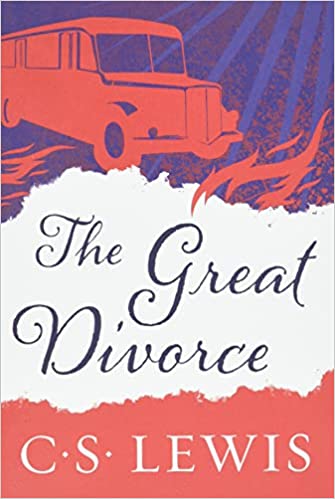
Books featured in this episode:*

Feel free to share this with anyone who you think might be interested in growing deeper in their faith and Christian discipleship.
Pastor Talk Quick Links:
- Learn more about the Pastor Talk series and view our previous studies at https://pastortalk.co
- Subscribe to get the Pastor Talk episodes via podcast, email and much more! https://pastortalk.co#subscribe
- Questions or ideas? Connect with us! https://pastortalk.co#connect
- Interested in joining us for worship on Sunday at 8:50am? Join us at https://fpcspiritlake.org/stream
*FYI, if you purchase the books through these links, First Presbyterian Church will receive a small commission from Amazon.
Pastor Talk is a ministry of First Presbyterian Church in Spirit Lake, IA.
Hello, friends,
and welcome back to the Pastor Talk podcast.
It is great to see you.
Thanks for taking time again with us as we jump back into a conversation
about some books that both Pastor Clint and myself have found on our library
shelves that we think have been meaningful for us.
And we’ve been sharing those books with you throughout this series.
Today, we come back to another series of books,
maybe a little different
than some of our previous conversations.
We have a pretty sort of controlling theme,
a little bit of a red thread
that went through some of those previous book selections today is a little bit more broad.
I think we’ve selected different books of very different styles,
though both of them, I think, very meaningful.
And we’ll tease out ways in which that you might find each of these books
to be helpful at different places,
or if you’re a different kind of reader,
what might strike you?
And it’ll be a fun discussion here today.
In fact,
as we lead into the conversation,
the first author we have for you today
is not a new author.
In fact, he wrote the book that I recommended called The Pastor,
and it was his spiritual autobiography.
Certainly take a look at that if you haven’t had an opportunity
to see that recommendation.
But this book, I will make it very clear,
comes with a very different focus and will read entirely different than that other book.
So though it may be the same author,
Clint, I think that people are going to
find in the book that you lead us off with here today a very fresh and different voice.
Yeah, I think that’s true,
Michael.
If there were a connection between our books,
it’s probably just that they’re
both written by very well-known kind of giants in the mainline church or the
faith of the mainline church, C.S.
Lewis,
Eugene Peterson.
And yes, you had mentioned Peterson’s book The Pastor,
which is kind of a retelling
of his own story.
This book is called Eat This Book,
A Conversation in the Art of Spiritual Reading,
and this is a tough book to classify.
It’s part of a series of books he did on spiritual topics.
The first one was called Christ Plays in Ten Thousand Places,
and then there were others that followed.
I would recommend all of them,
but I think of the five,
this is the one that
struck me the deepest when I read it.
And this book, let me try to do justice to it,
it’s essentially a conversational
book about the Scripture,
but it’s not facts and figures about the Bible.
It is, I think, a celebration of the Bible’s role in the life of the believer
and the life of the church.
And Peterson,
he takes a wide range of paths in this book.
So there is a section of this book on some spiritual reading disciplines.
How do we read the Bible?
There is a little bit of where the Bible came from,
but really not done as
history as much as it is a sort of theological celebration of how is it
that God’s Word has found us.
There is a ton in this book that I think the average person may not know about
the Scripture and will enrich their understanding and their view of this
book we call Bible that we take for granted.
There is a conversation about the role of the Scripture in church life,
in communal life,
and including some autobiographical stories of Peterson’s
own struggle with teaching and preaching and trying to use the Bible to make an
impact in his community,
both of faith and his community in which he lived,
and to see people grow in their discipleship.
You know, it’s the kind of book,
Michael, that’s a little bit all over the place.
I think that’s one of Peterson’s strengths.
He weaves things together really well.
That makes it very unlikely that you find yourself just feeling like you’re bogged
down.
He changes tact a lot, changes approach.
It’s a good storyteller.
I think,
for me personally, I would only say that while this book didn’t teach me
more about the Bible than anything I’ve read,
this book probably inspired me and
helped me understand the role of the Bible as well or better than any book that I
read.
I found this just a really helpful,
insightful,
profound celebration of this
book that we all take for granted and a reminder that we probably shouldn’t.
And so I think this is a helpful book.
In some ways,
maybe this is true of Peterson in general.
You could weigh in on this,
Michael.
It’s not a super easy.
This is not light reading.
This will take some thought.
This will take some intentionality.
There are parts of this that are somewhat academic,
but not many parts,
but they’re helpful when you get them.
But I think this is a book that just about anybody could read.
And I would maybe go so far as to say most people probably should read.
I’m embarrassed to say that maybe it’s at this point in the conversation I can see a
little bit of the thread that connects our books because I think what Eugene Peterson and
C.S.
Lewis share is a deep passion and gift and commitment to writing from a very deeply held Christian faith.
And Eugene Peterson is, in my mind,
a very narrative person.
He writes very carefully,
very illustratively.
He is an excellent writer.
He tended the craft of writing with a lot of intentionality.
And he was also a pastor and he brings a pastor’s heart to it.
I have here, Clint,
just the table of contents here.
I’ll throw this up here.
Scripture is text, learning what God reveals.
Scripture is form, following the way of Jesus.
Scripture is text or a script,
sorry, playing out our part in the spirit.
Like you said, like Dio Divina,
company of translators.
It appears to me that maybe we might be able to summarize this.
Would you say that while it may not be about the historically,
exclusively about the history of the scriptures,
or it’s not exclusively about how to translate the Bible or
how to study the Bible,
it’s in some ways a pastor and an excellent writer trying to
write a book that encompasses many or all of those themes in one book.
Is that fair?
Yeah, I think that’s part of it,
Michael.
I would say that if you reached for a theme of this book,
it would be that we are not
as Christians called simply to read the Bible,
but to live the Bible.
And I think he does a very,
I think he does that very well and challenges us as people
who follow Jesus Christ to understand that the scripture is a map.
It’s a guidebook showing us the way of Christ.
And I think that undergirding that,
he has these wonderful conversations about what do
we mean when we say the scripture is true?
What do we mean when we say the scripture can be trusted?
And Eugene Peterson, I think, helpfully,
from my perspective,
comes from a mainline Presbyterian place.
And so I think this is a book I can highly recommend to folks kind of in our circle of
mainline Christianity and maybe even the smaller circle of Presbyterianism.
This resonates with what we have tried to say we believe about the scripture.
He does that very clearly.
He does that very well.
But I think this broader point of celebrating the Bible ultimately as the thing that shows
us who we are capable of becoming in Jesus Christ.
Not a rule book,
not a history book,
not a science book.
It may have elements of all of that.
But ultimately,
the Bible’s clear intention is to help people become Christ-like.
And I think Peterson as an author is able to ring those bells so clearly and so crisply
that I really think this is inspiring reading.
I don’t think anyone would be bored with this book.
He may mention, he’s pretty good about explaining things that aren’t going to be common knowledge to people.
I think this book is accessible.
I’d love for people to try it out.
And if it feels like it’s a reach,
it’s not a simple book.
It’s not a shallow book.
There is a lot in here.
But I think one would leave this book with a much deeper appreciation of the Bible itself,
the history of the Bible,
the reality of the Bible,
and especially the opportunity in Scripture
to hear and see a calling to be the people of Jesus Christ,
both as individuals and collectively as community.
I think that’s what Peterson does exceptionally well in this work.
And I just read essentially a foreword that he wrote,
or looking back, they republished one of his books,
and I got to read
one of the things he said later on in his career.
And this is very much at the heart of what Peterson described as being the heart of his
sense of the Christian discipleship,
is engaging with the Scripture in a meaningful way,
is being people formed by the book.
And what strikes me at this point in the conversation is,
if your experience of studying the Bible
and reading the Bible has been very much looking for sort of that simple,
literal reading to sort of, what’s the thing I need to do today?
If that’s been the major thrust of your experience with the Bible,
Peterson is only going to
deepen that.
He’s deeply faithful.
He cares about how the Bible intersects,
how these words become holy Scripture that transforms
our lives and imaginations.
He cares about that.
But you’ve said this numerous times now, Clint.
He’s not going to approach it simplistically.
He’s not looking to boil the Scriptures down to their bare minimum.
He’s going to lift them up in a way that we can see that they are actually a multifaceted
diamond, and they are valuable because of that.
They bring a kind of breadth of experience that a thinking,
faithful person can spend
a lifetime learning and growing and being formed and shaped by the Scriptures.
And so if you do have a relatively,
maybe you might say simplistic,
or maybe you might
just say that you’ve had a very sort of cursory or surface-level experience with the Scripture,
this strikes me, Clint, in the way that you describe it as an excellent book to begin
deepening that experience.
I want to be very careful here,
Michael, because I certainly don’t want to put words in Eugene Peterson’s mouth,
but I think I would argue,
in light of this book,
that what Peterson offers is not a conversation about whether the Bible is true,
which dominates so much
of our modern conversation,
but how the Bible calls us to be formed as people of Christ.
And I think at least in the lens of this book,
what Peterson understands is that the Bible’s
greatest gift to us is not abstract or objective truth in the sense of teachings and rules,
but an academy,
an educational institution to form us as Christ’s people and to encounter
in the Bible an opportunity,
an invitation of who we can become.
And I think, you know, that’s a different understanding.
So many of our modern arguments about the Bible are about the Bible itself.
And I think what Peterson reminds us is that the Bible is a tool of the faith.
It is our greatest tool to be exercised with prayer and compassion and generosity,
but that the Scripture really is the way that we progress into sanctification, into becoming
more and more like the one that we follow and serve.
And it is such a helpful voice in the conversation.
And so, again, I don’t want to oversell it.
I was stunned by this book.
I read it decades ago.
I continue to go back to it.
I continue to be inspired by it.
It is one of the best things I’ve read in regard to how Christians understand,
use,
and celebrate the Word of God in our midst.
And so, I give it very high praise.
We will put this book in the description of the video or the description of the podcast.
If this is resonated with you,
pick it up and do let us know what you think.
We’d love to hear about it.
That, I think, leads us then to the next book I bring here today,
The Great Divorce by C.S.
Lewis.
If you have ever run across C.S.
Lewis, I’m certain you probably heard the name
of this book, even if you’ve not read it.
It is one of his fiction works.
It is unlike his
Chronicles of Narnia in that it is not fantasy.
I’m not aware.
Maybe you would say the screw
tape letters would be the closest analog I can think of to other things I’ve read of C.S.
Lewis,
whereas it’s a fiction story,
but it’s told with the sole purpose of being parabolical.
It’s all about illustrating spiritual truths,
but doing so in a very purposefully fictionalized sort of setting.
I read this book at numerous junctures of my life.
I read it as a child when the story
itself was all that interested me.
I read it in undergraduate school when I was studying theology
for the first time,
and I found in this book a substantial amount of theological insight.
And I read again later,
actually, a couple of years into pastoral ministry and found in it
deep human truths and found it deeply connecting with my own life experience.
And so I highly
recommend it.
I suppose a short description may be fair here,
Clint.
This is a parabolic story,
an allegory of essentially heaven.
And the idea is that the story begins in this bleak town.
And from this bleak town,
some individuals are, by their own choice,
able to get on to a bus,
and that bus takes them to heaven.
And C.S.
Lewis describes what this heaven looks like.
It is the most real experience that these people have ever had.
And so things like stepping upon
the grass is painful because the grass in heaven,
which is truer than anything they’ve ever
experienced, is actually difficult for their bodies.
They come across various numbers of
people who are sort of on their journey through this experience of heaven,
and some of them are
struggling to accept grace.
Some of them are struggling to accept salvation.
Some of them are free and light,
and they’ve sort of experienced heaven in a substantial way,
and it’s changed them.
And all of them are sort of on this process or on this journey.
This idea of the image of the bus
and moving forward into this process is the controlling theme.
They’re all in various levels
and stages of approaching God’s love and grace.
Some are struggling to do that.
Some have accepted it and are lighter because of it.
And each really example or relationship or person that is
encountered throughout the book represents a different experience of someone who is either
accepting or rejecting or moving closer or farther away from the grace of God.
In some ways, maybe,
if I’m going to be honest with you,
it’s one of the hardest C.S.
Lewis books to describe.
Maybe it’s one of those books that makes the most sense once you’ve read it,
but that’s a short overview,
Clint. Yeah, I think, Michael, is it fair to say,
I mean, this is essentially a novel,
and though perhaps
less substantial,
and I mean size-wise,
kind of falls in line with Dante’s Inferno or maybe
Pilgrim’s Progress, the idea of a man who is guided through a spiritual landscape and on that journey
learns lessons, both positively and negatively,
from encountering others who are either wanting
to go back or trying to go forward and unpacking some of what that means.
And so,
kind of reflective of the day in which Lewis lived and some of the issues,
but also
connecting to this deeper thing that Christians have tried to do occasionally, which is to
imagine a story that also has some explanation in it with regards to not teaching theology,
but seeing it through story.
Is that anywhere close?
I think your examples of Dante and I think Pilgrim’s Progress really strikes me as being
a really fair example of this,
because both of them are journey stories,
and they both represent,
they both start with the intention of teaching something about the faith through the process of
seeing it through an imaginative eye.
I think what is difficult about reading The Great Divorce,
and we actually did a class on this here at the church,
although it was short-lived.
We didn’t make it through the entire book.
I think one of the things that is a struggle in this book is,
it is so allegorical,
the meanings are so much more spiritual than the story itself,
that it’s not the kind of narrative you read like the Hardy Boys or one of those simple summer
reads where you get through it and the resolution of the story is enough unto itself.
It’s not that kind of book.
It is a book,
if I’m going to be honest,
that’s going to demand a little bit of investment.
Some of that may be reading externally.
Some of that may be slowing down more like poetry
than like reading a fiction book,
because when you slow down and take a chapter and reflect and ask,
I’ll give you a really concrete example.
There’s a story where there’s a person who
is bearing these weights,
these chains, they’re holding them back,
and an angel comes up to this person and says,
“I want to free you from this.
Just give me permission to cut the chains to release
you.” And the person fights and struggles and grasps and tries to hold on to these chains.
When you read the story and you give time to think about it,
C.S.
Lewis is clearly
representing that part of all of us that has become attached to our deepest sinfulness,
who’s become comfortable with the ruts that we’ve built in our life, those things that
we know hold us back,
but they become comfortable,
and so therefore we hold on to them.
And the thing that hurts us is the thing that we protect.
And in this narrative form,
in a kind of short,
even economical set of words,
Lewis portrays God’s ability to break these things free from our life.
And in the story that he tells of this individual,
the person gives permission.
The angel does indeed
set them free, and in a fiery moment of pain,
actually,
this individual is loosed from this
thing holding them.
And just in that illustration I’ve given you,
you could connect that to Jesus’s
story of casting out demons,
and the moment in which that demon’s set free,
you could connect that to our actual lived experience.
Some people,
in their encounter with the gospel of Jesus Christ,
their transformative
experience, their repentance, looks like a flaming moment.
There are people who
are alcoholics and drug addicts and struggling with addictions of all kinds,
who come to the
faith, and in a fiery moment it transforms their life in an unbelievable, visible way.
If you’ve been a Christian for any time,
you’ve encountered someone with that faith story.
Now, what Lewis does, I think,
spectacularly,
is display that kind of scriptural,
spiritual reality in his fiction,
and that’s one story of Clint,
maybe 20 or 30 micro vignettes that you’re
going to find in this book,
others representing those who’ve had a long experience of conversion
and faith, and others who’s struggled with idolatry of much more public,
acceptable form.
It’s really hard for me to summarize the book because the breadth that C.S.
Lewis brings to it.
I think what I would say by way of,
“You should read this book.
You should read this book.”
If you like fiction,
if you like poetry, absolutely,
especially
theological, rich, deep kinds of poetry,
you’re going to love this book.
If you’re someone who is comfortable with
parable or allegory, maybe you’ve read some classic literature,
or maybe you’re someone
who has simply found spiritual stories that represent other things to be meaningful,
maybe a contemporary example.
This is tough, but like The Shack,
if you read The Shack and you found it helpful,
you might find it somewhat similar to what Lewis is doing,
except many years previous, and I think much more informed by classical allegory than contemporary fiction.
All that said, I don’t want to make it more complicated.
If you find yourself in those circles, Clint,
I definitely recommend this book,
The Great Divorce,
C.S.
Lewis.
Michael, is this fair?
From my perspective, it would be a mistake to…
This is not a big book.
It’s not difficult reading.
It would be a mistake to knock this book out in an afternoon,
to just sit down,
cover to cover, because for Lewis, the characters are also illustrations.
They are themselves lessons.
They are people in our own lives.
They are people who have an
opportunity to leave something behind and can’t do it.
They prefer to go back to where they came
from because the new is scary.
There are people trying to leave some of their demons behind.
There are people who are tormented,
but largely by the voices from themselves.
And so,
I don’t think you would be well-served to just grab this book and finish it.
It needs to be a slow,
deliberate listening as you work your way through it,
because in each of those moments,
Lewis has not only presented a character,
he’s kind of preached a miniature sermon.
I mean, he’s given an
illustration or a parable in and of itself.
And I think you want to give
yourself time to let some of that make its way into you as you read this book.
And I think to do that,
if you didn’t do that with this book,
I think you would largely have missed the whole
intention of it.
I’m not entirely certain how much you would enjoy the book,
to be honest with you.
You’re going to have a hard time seeing this,
but I’m going to put it up here.
I’m not much of a book writer.
Yeah, you can’t really see this.
I’ve marked this book up
substantially.
I mean, just in these two pages,
I probably spent 10 minutes.
It’s the kind of book, Clint,
that a slow reading will yield fruit,
and a quick reading
is probably going to leave you scratching your head a little bit like, “What was that?”
So if you’re not a reader who has a substantial amount of patience,
the pro of this book is it’s big font and few words,
and it’s few in pages.
So you’ll get through this really quick.
If you are slow and methodical,
quite frankly,
I would personally, in fact, I may do this at some point in the future,
I would be comfortable going through this book
chapter by chapter with a spiritual journal and reflecting on what it means for me at this stage
of my life.
I think this is the kind of book that if you’re a creative thinker,
this would be generative.
C.S.
Lewis,
I find often to be great at inviting me into deeper conversations,
and I think he does so very well in this book through fiction.
Yeah, and is this book, Michael?
In some ways, this book is a good introduction to C.S.
Lewis,
and in some ways,
the exact opposite.
If you are interested in Lewis as a theologian and thinker,
I’d probably pick up Mere Christianity,
something along those lines.
If you have some basic
knowledge of C.S.
Lewis, you’ve read a few of the works,
you’ve not read this one,
this is a very
different tone.
This is Lewis kind of taking off academia and really throwing himself into narrative,
and I think you may enjoy it, but I
don’t know if it matters to you that C.S.
Lewis wrote this, you may want to pick up a couple of the intro works first.
Is that fair?
Yeah, to say that in a different way,
same content, different words, you might know that C.S.
Lewis was a literature scholar whose expertise was in medieval
literature.
This is the most medieval
thing I know of that he wrote.
That may not be the case,
he may have written some things that
are more so, but this has a kind of tradition allegorical nature to it,
which is written by a
modern writer but is not trying to be modern.
He’s not trying to be glitzy or glamour,
he’s trying to tell a story which at every turn has spiritual meaning,
and so I recognize for many people joining
us that may not be a common sort
of genre in your reading,
but I do want to make it clear the wording
of this is accessible,
the characters are accessible,
it’s not written in old English by any means,
anyone can read this book,
someone who wanted to slow down and read it carefully,
Clint, I think you’re going to get something from it.
Yeah, I’m struggling, Michael, to think of what is
the modern analogy to this book,
what is something modern that is along these lines and off the top of my head,
I don’t know that I land on anything.
The thing that comes to mind is like modern
retellings of fairy tales,
but those are just modern retellings.
This is not like a medieval
thing that C.S.
Lewis took and turned it into a modern telling.
This is unto itself,
it is a whole world unto itself trying to help us think about the difference,
instead of us thinking of
heaven and hell, which is really the subject matter,
instead of us talking about that as in
streets of gold and a fiery pit.
Lewis is using his imagination and the power of words to help us
imagine that heaven intersects with the earth and that heaven is part of how we live here and that
how we live here prepares us for heaven and heaven is God’s presence in a way which is far more
than crowns and walls and beautiful jewels.
It’s so deeply imaginative.
I don’t know, Clint, what the analog would be.
Yeah,
it is interesting that throughout Christian history,
a few authors have tackled in very creative form the question,
“If you could visit heaven and visit hell,
what would you learn from those you would meet there?”
And that in itself is a fascinating,
richly imaginative question and certainly the great
divorce is among those that tradition and history have said,
“Did that in a way meaningful enough
to stick around?” Right,
yeah.
Well, I think that’s enough said.
Either at this point,
it’s of interest to you or you’re like,
“I’m glad to know that that book exists.” But either way,
so here I’ve got “Here’s the Great Divorce” by C.S.
Lewis.
Clint, you’ve got…
Eugene Peterson’s “Eat This Book.” And both of these we would recommend to you for your own reading, of course.
We’ll make sure that the links to both of these are in the description
of the video and the podcast so that you can get access to them.
Don’t want to sound like a broken record, but please,
if you’ve read them or if you come to read them,
we would love to hear your feedback or questions,
generate some conversation.
If there’s another book by either Peterson or C.S.
Lewis, you would recommend that others should pick up.
Please share that with the community
so others can find that.
We would appreciate that greatly.
Yeah. Hey, thanks for listening.
Grateful to have an opportunity to talk about some things that have been important and helpful
to us and hope maybe the same would be true for you.