
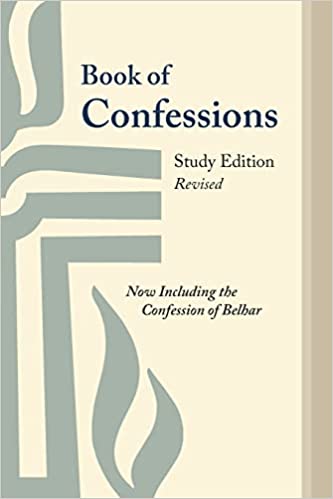
Today the Pastors kick off a new study of the Westminster Confession. There may not be another confession of faith that has had more of an impact on either Presbyterians in particular or the protestant church in America more broadly. Today, the Pastors explore the history and significance of the confession for modern Christians. If you are interested in picking up a copy of the Confession for your own study, you will find a link below.
You can also download a PDF version of the Shorter Catechism here: https://bit.ly/3Bf072r.
Feel free to share this with anyone who you think might be interested in growing deeper in their faith and Christian discipleship.
Pastor Talk Quick Links:
- Learn more about the Pastor Talk series and view our previous studies at https://pastortalk.co
- Subscribe to get the Pastor Talk episodes via podcast, email and much more! https://pastortalk.co#subscribe
- Questions or ideas? Connect with us! https://pastortalk.co#connect
- Interested in joining us for worship on Sunday at 8:50am? Join us at https://fpcspiritlake.org/stream
*FYI, if you purchase the books through these links, First Presbyterian Church will receive a small commission from Amazon.
Pastor Talk is a ministry of First Presbyterian Church in Spirit Lake, IA.
Hey friends, welcome back to our Pastor Talk podcast.
Good to see you after a break for the
summer as we move into the fall.
Today we start a new series on the Westminster Confession.
Specifically, we will be in the coming weeks looking at the shorter Westminster Catechism.
If that doesn’t make much sense to you,
don’t worry about it.
We will explain all of that today.
The Westminster Confession is a part of a collection of statements of
belief and doctrine that Presbyterians keep in a book called our Book of Confessions.
We don’t treat this as scripture.
This is really kind of a family album,
a look back at Christianity through the centuries
and what Christians have highlighted as most important.
It also reflects some of what was
going on, maybe the conflicts or the questions of their day and their age.
If you’re not familiar
with the Book of Confessions,
we have lots of them around the church.
Feel free to come by,
look at one, borrow one,
whatever you need.
You could also find all that information online.
But in that book,
there is this set of three documents that are almost,
Michael, I mean, I think it’s fair to say they are exclusively Presbyterian.
Not that others haven’t used them,
but their origins are Presbyterian.
Their primary location has been Presbyterian.
Of all the documents in this book,
I think these are the closest that we could say belong to us.
I think fair, Clint.
I think we’re going to complexify it a little bit in our conversation,
because if you’re going to pick a creed or a document that the Presbyterians have created,
you’re not going to find one that has had a broader reach or more significant influence
than this one.
And that’s for many reasons, both historical,
but also theological.
In some ways, this represents a beautiful kind of distilling of the reformed heritage that Presbyterians
have inherited and have really honed throughout the years.
And it’s for that reason that this
particular confession and then the catechisms or the study guides essentially that follow in its wake,
that these have become of prime importance in the midst of certainly the Presbyterian family,
but also becomes a reference point for those who are trying to understand what Presbyterians
believe as years go on.
And I think one of the things that’s really interesting about this
confession, we’ll talk a little bit about this in today’s conversation as we flesh out the historical
piece of this is,
though it has had this substantial influence,
Clint, in the life of the church,
it has not always been innately clear as to how to read it or interpret it.
In other words, the history of even Presbyterianism,
some have taken it more literally than others.
Some have said we should give it more authority than others.
It has been so important,
in other words, that this particular confession has actually generated some of the same kind of debates that
happen around scripture.
How do we read scripture faithfully?
How does it transform and change our
lives through its authority?
These kinds of questions have been applied not one-to-one,
but in similar ways to this particular confession because of how important it is
and how defining it is for Presbyterians.
Yeah, and I think there might even be people listening who resonate with that experience.
When I went through confirmation process in seventh and eighth grade in my home church,
we learned part of the Westminster Confession.
We didn’t have to memorize the whole thing,
which had been done in generations prior,
but we looked at it and we used it as a springboard
to kind of talk about doctrinal issues.
There was a time in this country when to be ordained as a
pastor, one had to stand and say that they affirmed everything that was in the Westminster Confession.
And if they had problems with any of it,
they had to identify what their issues were and which
section of the confession they disagreed with.
And then they got examined.
They got kind of
put to the coals on why they disagreed with it and whether it was acceptable or not.
And so not only was it a doctrinal standard in the church,
it was a membership standard.
It was a clergy standard.
It really was understood to be the encapsulation of what it meant to be
reformed in a broad sense,
but very specifically Presbyterian in a real sense.
And I think,
given that it had that kind of history,
the average Presbyterian should probably be more
aware of it than we are.
I think in the day to day,
it doesn’t really function as such.
If people know a creed,
they know the Apostle’s Creed.
They might have heard of Westminster,
but I think, you know,
creeds have kind of fallen out and that kind of instructional approach has
kind of fallen out of fad.
And so I think it’s very possible that there are many,
I wouldn’t be surprised if a majority of Presbyterians maybe don’t really fully grasp the history of the
importance and maybe the content of a document that has been so foundational to us.
Completely agreed.
And actually I’m going to just note,
not to throw anybody under the bus here, probably just myself.
Clint,
I need some study on the Westminster Confession.
Even, you know, I didn’t grow up Presbyterian,
so I didn’t kind of come with that through my traditional upbringing,
but even going through seminary,
going through my undergraduate theological studies,
you know, I didn’t do as much study on this as you would expect for someone,
especially for the historical
significance of it.
So I think let’s start there.
Let’s start with the history.
Let’s start with the story because no creed comes into existence without a story,
without a context, without the sort of reason that it has to be discussed and worked out because every creed,
every confession of the church is a massive effort.
It requires a substantial amount of resource to bring individuals
together, to give them time to debate and to flesh out their ideas.
And this particular creed
stands at a pivotal moment in actually the history of England.
And so if you start with the Reformation,
you know that it starts in Germany,
center Europe, and it ripples its way out as the
conversation about what it means to be reformed,
or in other words,
to go back to some of the
original scriptures and to allow them to define the church instead of the traditions it’s inherited.
It had a way of affecting the entire life of the European continent.
There was a transformation
as the church began to lose some of its social power over people.
Different rulers would align
with the Catholic church as opposed to Luther’s movement, which becomes Lutheranism.
But you’re going to know some of those big names, Presbyterian.
We’re going to have farther down the road.
You’ve not know there’s a substantial other set of those who find themselves within the Reformation
substantially disagreeing with someone like Luther.
You have people who later get the name
of Puritans, who are even farther down the Reformation road than someone like Luther
would have been comfortable with.
And so what you have in England is a whole bunch of political and
social forces all coming together somewhat simultaneously.
You have Presbyterians who
are essentially advocating for a reformed theology in a particular form of governance.
In other words, they want the church to be governed not by bishops,
but by the elected group of the church elders
themselves.
They want the people to have a say in the leadership of the institutional
overarching church at the same time that England is having a massive,
even military fight
by those who would prefer churches to be congregational,
entirely controlled by the
people within the church itself.
And looking back hundreds of years,
that may not seem like
a substantial debate, but Clint, at a moment in which the church was fighting against the
king of England, who was also trying to maintain control,
there was this short moment where the
question of how does a church govern itself had direct implication and impact on how the nation
thought that it would be governed.
And in that particular moment,
the church puts together its
best and its brightest.
And it says, we want you to create a statement of faith that will reflect
not only the truth of the Reformation that we’ve now come to understand as being authoritative,
but a way of being church that might provide a future gateway for even England itself, the nation,
to be able to live in the very stream of this kind of Presbyterian governance.
Now, as we know, looking years beyond Clint,
that didn’t all pan out the way that they intended,
but that was sort of the arising trouble that needed met by the words that we come to now.
Yeah,
there’s a lot of interesting paths here,
I think, Michael, and one thing that is maybe
sometimes lost on looking back on the Reformation,
which we all understand to be a change of church
thinking, is how much impact it had on national thinking,
and how much, in some ways, the church Reformation encapsulated political Reformation with it as well.
So in the early to mid 1500s,
you have, for instance,
England, who wants to get away from some of the Catholic influence,
and you have Henry VIII who declares himself head of the church,
because the Catholic Church was
not doing what he wanted, specifically, I think,
giving him a divorce.
And so he just says in the
midst of sort of the church upheaval of the Reformation,
then I’m going to be head of the
church.
And so, whereas in other countries,
you had Reformation in churches establishing a kind
of national church, in England, it went the other way.
You had a national church really before
Reformation had gotten there in the church perspective.
And so this creates a lot of
confusion, a lot of upheaval,
and the idea of what church we are going to have becomes tied to what
kind of government we are going to have.
Are we going to be governed by the people,
which you can imagine,
kings weren’t a big fan of.
And so there are all of these myriad conversations that
are having in the midst of this.
And the form of government called Presbyterian is particularly
strong in Scotland as it develops.
And so the English church through this group called,
and you’d know this language,
the Puritans who want to purify the church and the country,
they embrace this idea that Presbyterians may not have exactly the right theology,
but they have the right form of government.
And so the Puritans become very interested in Reformed theology and
in Presbyterian governance, and they begin to advocate it.
So you have this very messy process
in England that results in the call of Parliament to establish a teaching document, a creedal statement,
actually several of them,
one to be used as the statement and several to be used to help educate.
And they bring, I believe it’s six advisors over from Scotland to be a part of the
process who bring this kind of Presbyterian expertise and influence.
And they go through
this process and they meet at Westminster Abbey,
hence the name,
and through that long drawn out
process, it results in what we call largely what we call the Westminster Confession and the two
documents that we have kept with it,
the longer and shorter catechism,
which catechism means teaching
documents.
Those are instructional documents.
And you would think,
Michael, that having done that,
that’s kind of, you know,
good job, end of story, but it even almost gets stranger after they get
finished.
Well, yeah, right.
Because it doesn’t just go from being written to being enacted in
any meaningful way, because there’s this particular person we need to introduce you to here today.
It’s Oliver Cromwell, I got him brought up here,
who actually takes upon himself the
sword.
He actually is a military general who’s fighting on behalf of the king’s interest,
which is the exact opposite of the Presbyterians alignment,
because they find themselves,
you know, I find some humor in this Presbyterians today, I think,
often complain that they find themselves
in the middle of a lot of the debates that they have people sort of that stand between the two
sides of political cultural discourse.
And so the same here at this moment of history,
you’ve got the Puritans who are essentially trying to rid the country of any kind of royal right,
any kind of kingly authority.
And on the other hand,
you have the king’s allies who are trying to enshrine and
establish a state church,
which would have no room for it.
So here you have in the middle,
the Presbyterians just kind of trying to make this creed,
this confession, that would be representative of the national churches that would enable them to have a church regardless of that
particular religious or social structure, that governmental structure.
And so after they get this passed,
they do so by the way,
with massive turnover, there’s warfare happening while they’re deliberating.
And by the time they actually do finally get this passed,
the king has actually
been reestablished in authority due to the work of Cromwell.
So what’s striking is the very document
that they originally conceived of as being sort of the marching order or the maybe almost the
constitution of a new way of being government becomes too late.
It’s not done in time.
And this whole transformation happens,
the king’s put back in power here, this document exists.
And so England will never receive or use this document in the way it had been intended.
But as Clint has already pointed out,
this has already been substantially worked on by Scottish ministers.
They’re going to take this back home to Scotland where it will rule the day it will become a
primary navigating kind of document both in the church and in some ways culture.
And then from there, interestingly,
and I don’t want to rush too far ahead here,
this document is going to be imported,
I guess, exported to America,
where it’s going to become substantially important in the
founding of the colonies,
and actually a diversity of church groups.
So I won’t go too far there.
But yeah, the path that was originally conceived here,
Clint, is not the path taken in reality.
Yeah, of course, you can play these games with history with no end.
But it is interesting to
think had a few things gone a different direction,
we may think of England and not Scotland as the
home of Presbyterianism.
It was historically pretty close to that.
In fact,
that is actually the path that many of them thought they were on.
But it doesn’t happen.
This group takes what they
have done, this Scottish contingent,
take what they have done back to Scotland,
which is far more friendly to that form of governance,
who is far more inclined to that theological view.
And it really becomes entrenched there.
It becomes well used.
It becomes a standard of teaching and
belief in the churches.
And then as you said,
Michael, as sort of the world expands and things, connections get made,
it has a very strange and very…that group of Puritans never really lost that connection.
And so when they show up in America with a somewhat blank slate of
governance and church structure,
they lean Presbyterian,
and they now have these tools,
Westminster and the two catechisms that go with it,
to begin building those structures.
And what is really fascinating,
and you alluded to it, Michael,
is the breadth of the usage of
Westminster Confession.
I mean,
it starts sort of English, then becomes Scottish,
then becomes deeply Presbyterian.
But in the mid-1700s,
with some changes to sort of allow for adult baptism
and make that the norm,
there’s Baptist contingents that make this their creedal statement.
Congregationalists make this their creedal statement.
They sort of get rid of the governance
part of it, but they embrace the theological part of it.
And so think about that for, again,
you made the kind of observation of Presbyterians in the middle,
but imagine in the breadth of that
early American church, you have everything from Baptists on one end to Presbyterians stuck there
still in the middle to Congregationalists on the other side,
all to some extent using the theology
or the theology and practice of a very,
a creed confessional statement with a very messy history.
And yet, all of them are finding it compelling and usable.
And that continues even into the
1900s, where there are debates at Princeton Seminary,
and that goes back into specifically the Presbyterian family.
But for a significant chunk of American history,
this creed stands somewhere near the center of multiple theological traditions,
which I think is fascinating.
Yeah. And that is a reflection,
Clint, I want to be clear,
you don’t want to rush too far ahead
here.
That’s a reflection of,
as this document was created as a reflection of the true Reformed
faith of its time,
it stood at a unique historical moment,
because the Reformation was no longer new.
And in fact, we were already well into and moving beyond the second generation of Reformed theological inquiry.
And there are movements in it,
in the original writings of Luther and Calvin,
and there’s another individual called Zwingli,
who was also influential.
In the original writings,
you get this sense of a theology that’s literally being worked on it,
it’s being created in the
midst of conversation reflection,
the next generation came to it,
they began to systematize it.
And they tried to ask questions about,
well, if this is true,
then how is this true?
And they would find inconsistencies, and they would try to find blends to them.
And we have things like what
you might have heard of as tulip come out.
And while all of this is important,
I think a unique
distinctive of the Westminster Confession here,
Clint, is in some ways,
it boils down to the core of those questions.
It really is incisive in its moment to look back and to see the best of that
theological work, and to summarize it in a way,
which is both authentic to Reformed theology,
authentic to Presbyterian polity or church structure,
but yet is really broad enough and
open enough to allow for the kind of work that eventually would happen to carry it into history.
It’s a living document in a way that the best theological documents always are.
Though it was written in a particular time,
it is striking that the congregationalists in the United States of
America years later, in a radically different culture,
still found it helpful.
There’s a reason why the turn of the 20th century Princeton Seminary became this American bastion of Westminster
theology,
both for good and for ill,
if you look at the historical account.
And there’s a reason
why all the way up close to the 21st century we had confirmation students memorizing sections
of Westminster is because within this confession is a deep and lively theological,
not just reflection, but really encounter with the Reformed understanding of who God is.
So I want to make it
clear as we talk about history and context here, Clint,
we’re not saying here’s a time lock document,
which is interesting to look at in a museum.
We are saying because of the people who wrote it
and those who carried it and found it helpful,
this is a place that’s worth our time and attention.
This is a confession, which we,
if we are humble enough to listen,
may find speaks substantially
to our own life of faith and our understanding of who God is today.
Yeah,
and while we’ve scratched the surface on the history,
and all of this again is available
online, or if you’d like to come by,
we’ve got a couple of books we could let you borrow.
If you are deeply interested in the history of the creed,
the confession, and how it got put together,
that information is out there.
But I want to say that I think it would be a mistake to treat this
and full admission to some extent,
that’s what we will do in part.
But to treat this as a kind of
theology document to be dissected and a doctrinal statement,
it doesn’t catch, I think, the full importance and meaning of why this exists.
This wasn’t written for church literature.
This was written for people to understand their faith.
This was taught to young people.
This was taught to teenagers,
considering joining the church.
This was taught to new
believers who had come into the faith and come into the church.
The idea here is not that this
would sit on a shelf as some sort of reference book of what we think Christianity is doctrinally,
but that it would exist as a kind of guiding,
living document, as you said, Michael, that it would guide our faith,
that it would help us understand the scripture,
that it would frame for us what it means that we call God,
God, that we call Jesus Savior.
How does God work in our lives?
How does the church work in the world?
These were
pressing faith questions that Westminster and the people who used it hoped would reach out with
faith-shaping wisdom and have an impact on people’s lives and people’s faith.
It’s easy to think that we’re going to open a book and look at an old document and see if we still
agree with any of it,
but that’s simply not the best way to read.
This is a snapshot of what
very wise and faithful Christians believed in their moment,
the gospel looked like for them,
and when we encounter it,
we’re hearing those voices and learning from them,
even as in our
own context and culture,
we try to shape the same ideas and the same understanding for our day and
time.
You know, Clint, you made mention in our earlier conversation,
and I think it’s worth
repeating here, that for years, hundreds of years, this document was a foil for Christian leaders.
You would be asked to read it and to respond with your reflection,
and if you did find a place of
divergence, if you found a spot that you didn’t line up,
this would become the rule that you
needed to be measured against,
and you should have some substantial theological biblical
reasoning if you were going to contradict it,
and that is inherent to that idea,
is the great strength of all confessions,
and as we look at this confession,
particularly the Westminster confession,
is it gives us a rule to measure our lives and faith by,
and there is something lost
in our modern society where,
you know,
in some good ways,
we’ve allowed some of the definitions
and distinctions between our theological and faith traditions to be a little bit more flexible.
You know, there’s less finite boundaries between what it means to be Presbyterian and Lutheran,
or Presbyterian and Methodist,
or even maybe Presbyterian and Congregationalist or Baptist.
I mean, in some ways, we’ve allowed there to be a fluidity in our contemporary practice of the
faith, and there’s some great blessing in the ecumenical cross-conversation and pollination
that can happen in the midst of that.
That said, though, Clint, I want to make the case
that there’s something deeply generative when you take a confession like this seriously,
when you really submit and learn and put yourself in the shoes of those who wrote it and seek to
be taught by it,
you will inevitably,
if you are thinking deeply about anything,
find places of divergence.
Yes,
but you wouldn’t find that divergence,
and in some ways,
you wouldn’t even be drawn into the conversation if you didn’t have the ruler to measure yourself by in the first place.
So I think that,
in short, I’m making an advertisement for going through the process of
taking a confession seriously.
It’s not about you lining up and getting a green checkbox on
everything that it says.
It is about a confession of faith that has deep historical roots and
therefore brings with it some substantial theological wisdom,
and us being willing to
learn and be challenged by it.
And if you submit to that process,
maybe it’s not one that strikes
you as exciting or interesting right at the start,
but if you’re willing to go with us along this journey,
you might be surprised at the challenging faith and the depth that it might
provide on the other side.
I think, Michael, it would be probably naive,
maybe even foolish, to think that you’re going to read through a document rooted in the 1600s and say,
“Yeah, we still agree with everything.” It is a dated document.
The language is dated,
some of the concepts are dated.
In some ways, the world and church have moved beyond,
but in other ways,
we find in all of the confessions these timeless ideas that continue
to instruct and guide the church.
Having said that, this is an evolving document because the
church never stays in one place,
physically or theologically.
The church continues to grow and be
in conversation with the world around it and with the ideas around it.
And so, one of the fascinating
things about this confession,
if you open Westminster in,
for instance, the Presbyterian Book of Confession,
you will see that during the period of the church’s history in America where
there was a northern and southern Presbyterian church that happened sort of before and after
the Civil War.
This was not uncommon in the American church,
but it happened certainly for Presbyterians.
You will find that we have preserved both versions of this confession.
So, during that period, which was a little over a hundred years for Presbyterians to have a
southern and southern church,
the southern church did slightly different things with the confession
than the northern church did.
As ideas came up about the place of women in church,
as ideas came up about marriage or church authority,
the southern and northern church handled those
slightly different and they adapted Westminster differently.
And you will see within the book
places where we’ve honored both of those.
So, in certain sections, you’ll see a listing
side by side of what the northern church said and what the southern church said.
And they’re often
significantly different and interestingly different.
And so, this is an evolving thing.
This is not a one and done conversation.
This is one of the ways in which we live into the future
in our faith, which is by taking the words and ideas of the best of our past and continuing
to wrestle with them.
And I think we see that happening even in the confession itself.
So, we don’t want to overset a thing up.
So, I think on some level,
maybe the concluding word is I’ll definitely drop into the description of this video a link to a book and maybe Clint
can throw a couple in there as well.
Just some recommendations.
If this is of interest to you,
the history of it,
if you want to get access to the actual physical PDF of that,
I’ll link to that
so that you have access to it.
Feel free to download that,
print it off if you want to have it.
But the point here is just to say,
this is the genesis of how we get this document.
Now, everything that’s going to follow this conversation in the series,
which is to follow,
which I’m really excited about,
we’re going to start taking it seriously and begin
going through the steps as the founders and writers of this document took us.
And we’re going to discover in it a very deep foundation for what a reformed faith looks like.
And we’re also going to discover some of the deep wisdom about what it means to grow deeper in that faith as we
seek to learn about ways in which those original reformers saw the gospel transforming not just
their own lives, but even the culture,
even the power structures of the world that surrounded them.
And if we’re able to hear it,
Clint, I think it’s going to be a really great study.
Yeah, I think just maybe a closing word,
Michael, on what we’ll do from here on out.
We mentioned that Westminster produced a variety of documents.
We have really maintained three of them in the
Presbyterian Church.
The longest and the densest is the confession itself, the Westminster Confession.
But the two teaching documents that went with it,
the longer catechism and the shorter
catechism, were used as an instructional
piece, as sort of a compliment to and a kind of fleshing
out of the confession,
the very long creed.
We will be primarily focusing on what is called the shorter catechism.
Now, I have to probably
confess or at least warn you that shorter there
is being used in 17th century Presbyterian fashion.
So it’s not short,
but it is shorter
than the other things.
It’s shorter.
In comparison,
it is shorter.
But it’s also done,
both catechisms are done in a question and answer format.
The idea was that if I was
being confirmed in the faith or if I was being ordained,
they would recite the question and I
would know the answer.
And so it was a learning kind of by rote.
And what this does is it allows
a lot of specificity as we look at each question.
The questions are narrow enough that I think it
really gives us the opportunity to hone in on very specific and very certain ideas,
rather than trying to parse whole sentences or whole paragraphs out of the bigger confession
that sometimes are very dense and very packed with theology.
The catechism is designed to be simpler.
It was designed even for young people or for young Christians.
And in the sort of
difference of time, I don’t think that hurts us.
I don’t think you’ll find it overly simplified at
all.
There’s a lot of depth in it,
but I do think it makes it a more accessible format.
And that’s what we will be primarily spending our time on
in this podcast.
Yeah.
And don’t
miss that the people
who are at the midst of the rise of publishing books and this huge move to teach literacy and
this whole transformation of society where the church faith needs to be taught to each and every
person in the pews,
that the Bible should be in the hands of the average church member,
make no mistake that the fact that they take the larger confession and they build it so it’s accessible
for the whole church is a reflection of their deeper theological values.
And it comes out of
the time in which they live.
None of this creed,
confession, or catechisms comes out accidentally.
And I think just to emphasize your point,
Clint, not only did they provide this for us,
but they did so because of their deeply held theological belief that this should be in the
hands of the people of the church,
that the people of the church should take this deeper confession very seriously.
And so in some ways,
this is our 2022 attempt to do so.
Yeah. And I think, you know,
if you’ve kind of gotten through this introductory session with us and you think,
“Ooh, that’s a lot of history.
That’s a lot of stuff that I don’t really
find all that interesting,” that’s okay.
We’re going to move on.
I think I would like to
confidently say that if you have any interest in the Christian faith,
and particularly our branch of it,
that as we look together at what our forefathers and foremothers in the faith found
most compelling and most important,
I think you’ll be intrigued by it.
I think you’ll be moved by it.
There’ll be some things that will be troubling,
maybe some things you won’t agree with,
but there’ll be a surprising amount of joy and conviction.
I think you’ll be surprised by some of it.
I think we’re looking at one of our…
We’re looking at ourselves in some ways at our very best.
Now,
our worst is never far behind,
but some of our very best is reflected in the sessions
that will come in this series.
Now, I hope you will be able to sense that,
and I hope it will
mean something to you.
Well, thanks for being with us.
If you’ve made it this far into the conversation,
If you want to do a few things to help us,
one would be you can certainly like this video
if you’re on YouTube or Facebook.
That helps other people find it.
If there’s someone who comes to
mind who you think that they might enjoy going along this study with us,
do share it with them.
Either send them a text or an email or make a phone call and let them know how that we’re
doing this.
They can join us every week,
whether that’s by audio podcast or whether that’s by video.
Whatever is most convenient for you,
we hope that you will participate in this,
that you will go along the journey with us,
and as we do so,
that we might both bring honor and
glory to God through our time and our effort,
and that we might learn something as we grow deeper
in our faith together.
Thanks so much, everyone.
Great to have you back with us.
Good to be back
with you.
Thanks for listening.