
In a fast paced world, growing deeper in faith requires patience and determination. Today, the Pastors discuss John Mark Comer’s book The Ruthless Elimination of Hurry and Richard Foster’s Celebration of Discipline. Both books, though different in style, provide practical spiritual disciplines to help nourish a life of Christian faith.
Books featured in this episode:*

Feel free to share this with anyone who you think might be interested in growing deeper in their faith and Christian discipleship.

Pastor Talk Quick Links:
- Learn more about the Pastor Talk series and view our previous studies at https://pastortalk.co
- Subscribe to get the Pastor Talk episodes via podcast, email and much more! https://pastortalk.co#subscribe
- Questions or ideas? Connect with us! https://pastortalk.co#connect
- Interested in joining us for worship on Sunday at 8:50am? Join us at https://fpcspiritlake.org/stream
*FYI, if you purchase the books through these links, First Presbyterian Church will receive a small commission from Amazon.
Pastor Talk is a ministry of First Presbyterian Church in Spirit Lake, IA.
Hello, friends.
Welcome back to the Pastor Talk podcast and to our series,
books that we like, things that we’ve read that have been beneficial and important to us and we
hope might be impactful to you if you’re a reader,
if you’re interested in some of these
topics.
We think that these might be good books to check out,
to look over, and we have found them very helpful.
And Michael, I think if there’s a theme for today,
it’s sort of the idea of Christian practice.
We’ve tried to select some books that have spoken to us
about how we live and incorporating some things,
maybe getting rid of some things in
our life that both help and hinder our Christian journey.
And start with you.
What did you bring for us?
Yeah, so I brought to the conversation,
Clint, of this relatively new-ish book by John Mark
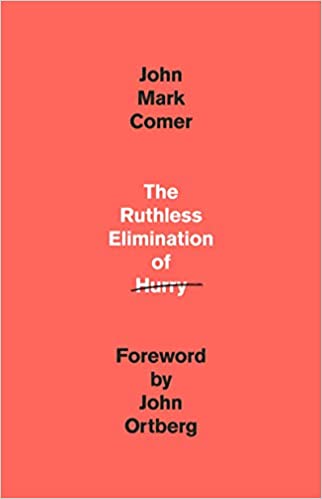
Comer, and its title is The Ruthless Elimination of Hurry.
I found this book,
actually by way of recommendation, one of our former youth had read it and I was having coffee with her
and she suggested, “Hey, I think you should check out this book.” And so I picked it up
and I got an opportunity to read it.
It’s one of those,
I think it maybe was a three-hour read,
sit down and just sort of plow through it kind of book.
And knew enough that you don’t actually have a physical.
Yeah, it is.
You’re right.
I don’t have a physical book to show you.
I actually picked it up as an e-book and that was very, very accessible,
really good.
But what I found
really engaging about this book,
Clint, is that it is written by someone who had experience
in pastoral ministry.
In fact, as he told his story at the beginning of the book,
he was a pastor of a very large multi-site church in the West Coast.
And his experience of that
was one of which he kept going and going and going and going and felt like he was on a
treadmill he couldn’t get off of.
And I think that maybe there’s some resonances as being
a pastor in it.
I think that what is interesting about though is that he steps out of his own
story to speak to what I think is a far more broad and cultural experience.
If you’ve ever felt like you’re burning the candle at both ends,
if you feel like your calendar is just
chuck full and you’re trying to triage each day and figure out what needs done,
if you find yourself sort of trapped in that cycle of just trying to keep up with all of the things,
then I think this is the book for you.
My experience of this book, Clint, was
it certainly tracks along theological ground.
He talks about some of the ancient Christian practices,
things like Sabbath.
He does address some of our modern realities.
He talks about things like smartphones and notifications and the impact that has.
But he does it not so much with
a sociological lens.
In other words, he’s not looking at it from the perspective of what’s
wrong with culture as much as he’s seeking to encourage Christians to find a life that makes
room for our awareness of God’s presence in it.
I found it encouraging.
I found it practical.
And yeah, so that’s why I think I moved to put this on the list for today.
We actually have this book,
though I’ve not read it yet.
It’s on my to read list and we have a
copy of it at home that both Jane and I have been working our way towards in our own reading lists.
But as you say that,
I have to assume,
Michael, knowing you and knowing that you appreciated this book,
that it’s not a how to.
This isn’t a how to manage your schedule.
This isn’t a how to get more
done.
It’s not a self-help book in that sense.
It’s,
I would assume, to hear you describe it,
addressing that sense of fatigue,
that sense of being overwhelmed or exhausted internally and
suggesting that the answer,
if he joins most of Christian history, I assume,
is not, in fact, doing more,
but perhaps focusing on things that are underneath the sort of constant busyness.
Yeah, I think I just throw up here so you all can get an opportunity to see it if you’re with us for the, oop,
if you’re with us for the video portion here.
You know, he addresses the reality of the
speed of culture.
I think what’s helpful sometimes is to be reminded,
Clint, that we do live in a
culture that values the go.
I mean, it values the constant energy and the speed.
And he sort of
traces that a little bit historically in a way I hadn’t seen before,
I thought was helpful.
But I’m looking here at part three,
and these are the four things that I would say,
if any one of
these resonate with you,
then this is a great book to pick up.
He talks about silence and solitude.
That’s an ancient Christian practice.
We’ve actually talked before about things like
contemplative prayer.
He talks about Sabbath,
and by that he means a day in the vein of the ancient
Christian tradition in which we set aside work for the practice of enjoying God.
Then he talks about simplicity.
By that he means living our lives with our stuff in such a way that they don’t
demand so much of our attention,
that we feel that we’re constantly trapped in a cycle of maintenance
as opposed to enjoyment of both our lives and of God.
Then he talks about slowing,
the idea that life is not best lived when we feel like we need to go 99 miles an hour down the road just to make
to the next appointment.
What does it look like to be more intentional in our lives to live with
a pace that reflects those who truly believe that God cares for us?
If there’s going to be,
I think it, I won’t be clear here,
I don’t think that this is the core point of his book.
I think if you read the core point of this book it is let’s make room for God in the midst of our lives,
and when we do that our lives will naturally be a slower pace.
I think for me the core point of the
book that I took away at the moment which I read it was a deep appreciation that if we can trust
God who made us and calls us as his own then we should be able to trust God enough with our lives
to know that we don’t always need to be in motion.
That if God was willing to rest on the seventh day of creation,
if God was willing to literally slow down the work that God had been doing and to
appreciate the goodness of it,
that that’s a good practice for us to incorporate into our own lives.
And Clint,
by personality and by Enneagram number and all these different things,
you know, maybe birth order, just throw it all in there,
Michael Gueche loves to add things.
I love to keep moving,
that’s who I am and it’s part of my personality,
and the spiritual practice of eliminating some
hurry was deeply personally meaningful.
So I’m not going to say this book is for everyone,
but if any of that resonates with you this book might be of interest.
So I’m curious Michael,
in
the sense of words like hurry,
do you,
through the book, do you experience that writing
primarily to mean a physical reality or an internal reality?
Is it a combination of both?
I mean clearly we live and function within a culture that values movement and motion,
you know, sort of keeping things in the air,
staying busy.
These are cultural values,
whether we talk about them in terms of hard work or whether we talk about them in terms of enjoying experiences.
We don’t do as a culture intentional downtime.
We occasionally do laziness,
you know, we do leisure well,
but I think we don’t do reflection particularly well as American people.
Do you have a sense that when he says hurry,
does he mean the actual physical acts
of going from thing to thing or does he mean that at a more interior,
in regard to a more interior conversation?
Yeah, I think the way that he begins the booklet is by trying to
make the case that we’ve allowed our internal soul lives to become impacted by external things
in a way we might not be aware.
And one of the examples of that,
I don’t think that the whole
book hinges on this,
but I do think it’s a helpful illustration,
is he spends some time tracing
particularly the 20th century talking about how we became more and more connected.
And, you know, whether that be through radio or through TV and through these different mediums,
and then we get
to the age of the cell phone and the smartphone and the idea that we have our devices constantly
pinging and digging us.
And that fundamentally, that doesn’t necessarily mean that we get more done.
It often means that it clutters our mind and our heart so that we’re always thinking of
the next thing.
Well, what is that message?
I know now I have to jump on that.
And we become inner people sort of trapped in a maze of ourselves,
trapped in all of the constant
things demanding our attention.
And so if you start from the attention aspect,
he moves forward to talk about Jesus’s invitation to take his yoke,
that his yoke is light.
And I do think
his point that very much goes throughout the book is this human temptation that we have
to bear all of the weight of our lives ourselves,
that we need to keep the ball getting pushed up the hill.
And once again, I think for me,
that message, that reminder that God fundamentally
calls us as people of faith.
Faith means trust.
God calls us to trust him with the stuff of our life.
And if you find yourself reaching to control that,
to keep a perfect schedule and to keep
everything moving at a thousand miles an hour,
I think that this book you would find as an invitation to,
first of all,
ask is that the best that God has made for you?
Is that the way that
you’ve been called to live?
And then I think these four things that I named,
they are practical,
but they’re not how-tos to the point that you raised earlier,
Clint.
They are eminently
reachable, but they’re not the kind of thing that they are a start here,
do this next step,
this next step.
It’s not a recipe.
It’s rather a,
it’s four places that you might find resonance
in your own life.
And so whether you found that in some form of Sabbath practice or whether you
found that in seeking to just create moments of silence in your day,
I mean, that is a very
practical thing that any one of us could do.
But, you know, at its most basic form, Clint,
you know, I imagine that all of us have lived our lives at a time where we could have used an
invitation to slow down and think deeper,
to ask some questions about why am I doing this?
Or why do I keep buying all of this stuff that I don’t need?
Or why do I find myself so anxious all the
time?
If that is maybe a moment of life that you find yourself in where it feels like there’s
maybe more horses pulling the cart than you can keep hold of,
then this book will be an invitation
for you to slow down,
to be reminded of the one who ultimately is in control,
the one in whom you trust.
And I think there’s a very freeing open aspect of the book in that sense.
It is not a
how-to, but it is an invitation to begin some really concrete practices that you might find helpful, instrumental maybe.
Yeah.
So check me on this,
Michael, but it sounds like the
target reader for this work is that person who feels stressed,
who feels maybe a little overwhelmed,
who is probably really good at getting things done,
probably has a pretty full calendar,
and perhaps needs to be reminded that life is not about all of those various things.
Life is not our productivity,
it’s not our projects,
it’s not our deadlines,
that underneath that, in a way that gets lost sometimes,
is an invitation to be still and know
that I am God,
as Scripture puts it.
Is that fair?
Is that the right person?
Yeah.
The person I’m thinking of,
Richard Moore often talks about the first half of life and the
second half of life,
and he has some really interesting ways of teasing that out.
Make no mistake,
I found this book compelling as a 30-something with kids and the job and trying to
keep up with families and trying to also find time for personal interests and hobbies.
So
obviously there’s a very clear cross-section of life in that, Clint.
I would say anyone who is
in a moment of life where you feel like the external things are demanding a lion’s share
of your time and attention.
The stuff of your life seems to dominate what you do and what you think
and who you think you are.
If that stuff seems like it’s pressing on you,
then this book is for you.
If you find yourself in a position where you feel like you have more time than you know what to do
with or your question is how do I go deeper into my spiritual disciplines because I have a richer
experience of community or family.
Maybe you’ve recently retired,
maybe you are sort of in a
later stage of retirement and you’re thinking about how you use your time in a way that is
incredibly deeply faithful and connects to your value.
I’m not suggesting this book may be of
interest and in fact I’d be interested if you’ve read it.
Go to the comments and tell me what the
book has been like from your experience.
I think it’s more targeted at the person who feels somewhat
tightly wound in the world in which we live and if you find yourself somewhere in that spectrum,
I think it’ll speak.
Interesting, yeah.
I wonder if there’s a transition here,
Clint, to your book because I think there’s a sense in which your book maybe is less targeted in that way if that’s fair.
Yeah, you know, Michael, we have tried as we structured this to pick books that complement
each other and I do think hearing you describe a book I haven’t read,
I think we did that maybe
unintentionally today.
I’ve chosen Richard Foster’s book,
Celebration of Discipline.
In many ways, it is the opposite of what you described.
This book was written in 1978.
I think this copy was printed in ’88.
It was named one of the top 10 books of the 20th century by Christianity Today.
Dr.
Foster is a professor,
a theologian,
a spiritualist.
Interestingly,
I think, and helpfully in regard to this discussion,
he comes from a Quaker background so he has some access to
some of that material that tends to be maybe off the grid a little bit for mainline theologians.
But in many ways,
this book shares some ground with what you’ve described.
This is a discussion
of the practices of the spiritual life and I think, hopefully,
maybe if we could see the
table of contents here,
you know, he talks about and he puts four items in each section,
the inward disciplines,
meditation, prayer, fasting, and study,
the outward disciplines,
simplicity,
solitude, submission, and service,
and the corporate disciplines, confession, worship, guidance,
and celebration.
And really, I would say that practically speaking,
in some ways, this is a workbook.
It’s not a project book.
It’s not a checklist kind of book,
but you would not need to read all of the content.
If you really wanted to be challenged on confession or worship,
you could go just to that section.
And it does kind of an encyclopedia of
the spiritual life.
And in each chapter,
he outlines the practice itself,
some of the barriers to the practice,
the importance of the practice,
and then some ideas on how to
incorporate the practice in your life.
And I think, intentionally, he’s chosen the word
discipline because he will acknowledge in every chapter that anything that leads us
forward in the path of Christ is going to take some work.
And for some of us,
these things are going to be very difficult to forgive that person that hurt you deeply and that
confess the thing that you’ve spent years trying to hide from people,
even perhaps from yourself.
I think this is the kind of book that I think anyone who takes it seriously
is going to find themselves challenged deeply at some point and called to make progress through
this idea of discipline,
of intentional practice toward a goal.
And I find this book helpful
in a couple of aspects.
I might even say formational in my experience, but this is
really good.
And I think one of the strengths of this book is it does cover at least 12 different themes,
each of which you could concentrate on when you needed it.
What I find interesting is the title,
The Celebration of Discipline.
And what strikes me in just hearing it,
Clint, is I think many of us,
if we’re going to be honest,
would say that we don’t celebrate the disciplines of the Christian faith.
We find them often to be
overbearing, to be sources of guilt.
Like, I know I need to pray.
I know I should read the Bible or
looking at this list.
I know that fasting is important,
but I don’t know how to do that,
or I don’t know why I would do that,
or the idea that I should be involved in a corporate group
of Christians, and that that should be a way in which my life is worked out.
But I actually find
myself doing other things.
I find my commitments a priority elsewhere.
The title itself, The Celebration of Discipline,
celebration’s positive.
It’s a gift.
I think that this is a connection
between our two books.
Talk a little bit about that.
How does Foster lay this out in such a way
that we see it as a gift,
as opposed to sort of an overbearing kind of guilt-inducing reality?
Yeah, my recollection is that he does that pretty honestly,
Michael.
I think that he acknowledges
that getting started doing anything is difficult.
That initial workload of incorporating prayer into
your life, or a fasting,
or study, whatever it might be,
that work of confessing,
that intentionality and worship,
that those are things that demand some effort.
And I think he’s very open about that.
I think he’s very clear that if we want to make progress,
we’re going to have to put in some work.
I think, though, that he also understands what most of us experience,
that after that initial
phase of really needing to make that effort,
we then find it deeper incorporated in our life,
that it sort of gains a momentum,
and then it goes from the discipline of doing it
to the practice of the discipline.
So once prayer is a part of our life,
we will struggle less to maintain it,
and the struggle turns toward how to improve it and how
to grow in it.
And I think he really does that well,
and I think he does that in a way that makes
room for everybody.
I’m thinking, for instance, of the prayer chapter and the fasting chapter,
where in the midst of those chapters,
he’ll talk about prayer sessions that may be extended
into hours or a
multiple-day
fasting experiment.
And no one is going to start there.
In fact, that sounds overwhelming,
sounds intimidating.
But the idea of growth is,
I think, woven into this as he applies that sort of idea of,
“Yep,
you don’t start running a marathon.
You start by going for a walk.
But you go for a walk every day and walk a little farther,
and then you try
running.
And then at some point, you run.
And then at some point,
you need to run because it’s now a
part of your life.
It’s incorporated into who you are.” And he doesn’t really use that athletic
metaphor, but I think that’s kind of the approach that he brings,
and I think it’s a helpful one.
What I like about it is,
at no point do you…
It feels
invitational.
At no point do you read this
book and say, “Oh, I could never do that,” and feel like you’re being scolded.
It’s always
read, I think, through the lens of,
“Okay, here’s where we are.
How can we make progress?
How can we make some…
How can we make some headway going forward?” And I think it’s invitational in that sense.
I’m curious,
Clint,
who…
Do you have a sense for maybe the audience that this book was written for?
Is there maybe someone in mind,
a certain amount of faith?
Yeah.
That’s a good question.
In some ways…
I suppose the obvious answer is the one I have the most questions about.
The obvious answer may be the new believer.
However,
maybe it’s because of the way I came to this book.
I feel like maybe the better answer
is the person who has been in the faith for a while and feels some level of staleness,
some level of sameness,
the person who’s been in church regularly,
the person who’s done some of the Bible studies,
the person who’s woven in and out of devotionals and prayer,
and maybe is looking for a new way,
a new path, a new word to inspire another way to think about something,
another challenge.
Maybe that person who says,
“Yeah, I go to worship,
but I’ve never thought
of that celebration,” for instance.
“I’ve never thought of celebration as a spiritual discipline.”
So, in some ways, I think maybe that’s the most ripe ground for this book is that person
who has a working understanding of the faith,
who has been through and seen some of the church’s
rhythms and practices, but who feels like there could be more depth in their own life for those
practices in a way for them to live into an energy and a motion forward.
I think that’s where I’d land,
Michael.
I think anybody could read this.
And again,
because you could take this and only read the chapter you were most interested in,
I do think it could be kind of picked up by anybody.
But if you were going to push me,
I think I’d say that person who understands the faith but would like to incorporate more of it
into their life, into their daily routine,
I think maybe that’s the ideal person.
I will want to begin this comment with being very explicit here,
because I think, from what I’ve heard now,
both of these books would be meaningful to a variety of readers.
I won’t make that clear.
I think there would be something here for everybody.
But as I’ve heard the conversation go,
Clint, it’s beginning to make me think that the
ruthless elimination of Hurry,
the book that we start with,
seems to me to be a little bit more
pointed.
It has a very kind of intentional connection with contemporary experience,
this idea of the always on world and trying to draw us in to some of these spiritual disciplines.
But Clint, I’m just looking at this table of contents.
I love that word that you used,
encyclopedic.
I see that here in each one of these sections,
the inward, the outward, the corporate.
It strikes me,
this may be the book that the celebration of disciplines,
that may be the book that you move on from the first.
If you find the first book,
The Elimination of Hurry,
to speak to you in your present moment,
it’s going to speak to a few of these disciplines.
But there are other disciplines here that are not
included in his discussion that are deeply connected to the ancient church’s practice.
And so it seems to me that it may be a great book to move on from.
If that first book doesn’t speak
to you, maybe you skip to this one.
If you found that first book helpful,
then maybe this is
the book to move on to next.
Yeah, I don’t want to pigeonhole either of these books,
Michael, but I can imagine the younger person reared in an age of technology and instant results.
It feels to me,
in some ways, your book, as I’ve heard you describe it, is more contemporary.
I would say this one is more
historic, and I don’t simply mean older.
I mean more connected to
the kind of ancient conversations of spiritual growth throughout the history of the Christian church.
And this one is – and I’m not
saying that the book you brought isn’t – this one
is going to bring us time and time again back to the idea that ultimately part of our spiritual
struggle is with our own sinfulness,
expressed in sometimes lethargy, sometimes apathy,
sometimes a sort of despondency or disconnect,
and that these spiritual disciplines are a way to push
back against the things in our life,
the various things in our life,
that can steal the experience
of joy and of discipline from us.
And I think maybe in that sense,
this book is a little more
universal.
I mean, this is not a contemporary book.
Almost nothing that we enjoy as technology
existed when this book was penned.
But I would say it didn’t aspire to be contemporary.
If anything,
it aspired to connect people of its day with an ancient conversation.
And I think that
does give it, I assume, a very different kind of flavor, though
not disconnected.
I don’t want to keep hedging here and trying to say it is this,
but not this.
But I do think
there’s – I hear a certain timelessness by intentionality.
And I think there’s a very
purposeful timeliness in the book that I bring.
I think one is trying to speak to a very,
very contemporary experience, but do so with the ancient traditions of the faith.
And I think the other,
also speaks to our current experience,
but maybe less intentionally.
So maybe it’s intended to be more timeless.
Yeah. You know,
I don’t know for how long this will last, Michael, but
this book is considered a classic of Christian spiritual literature.
And I think it will have
a place on that bookshelf for the foreseeable future.
This is a book that will live long after
it’s time because of the way that it has tried to bridge that conversation about how do we grow
spiritually and what are the tools that our tradition has shaped for us that are helpful.
And, you know,
I don’t know that it set out to aspire to be a classic,
but so many people have
found it helpful that I think it occupies that space at least for the foreseeable future.
And I certainly have no disregard for that book,
but I don’t know that that book attempted to be
or by subject matter is going to maybe occupy that same realm.
I hope that’s not unfair.
No, I do think that there’s a probably more accessible,
invitational nature to the book that I brought.
Yeah. If you’re not an avid reader,
if you’re a person who just sort of
maybe occasionally picks up books,
I do think that this is going to be a far easier pool to
wade into.
This is the deep end.
This is the deep end.
This is not an easy read.
This is not a weekend book.
This is a book that you could take off your shelf year after year,
read even things you’ve read before and be challenged and be—this is, I would say,
at the far end
of that
literature on growing spiritually.
This is the deep section.
So let’s make sure that everybody here knows,
again, what we’re talking about in case one of these books has been interesting for you,
the book I brought once again,
The Ruthless Elimination of Hurry by John Mark Comer and
Clint you brought.
Celebration of Discipline by Richard Foster.
And I want to make sure you know that we will put links to both of these books in the description
if that helps you find them a little bit easier.
I also want to just insert here,
maybe you’re not a book person but this conversation has been interesting,
we did do a series on spiritual
practices that is not the same as either of these books but does include some of those themes.
I’ll put that in the description below.
So if you’re interested in this video and this podcast,
if that’s of interest to you,
feel free to jump into that at your leisure and maybe in the midst of
that process you would then want to come to one of these books.
I mean, that’s great both ways.
But of course, as we said before,
these are recommendations of books that have been on our
library that we might recommend.
We would love to hear from you.
Have you found these books helpful?
Have you read them?
What did you think?
Do you have other books that you would recommend to people
who are listening and engaging that help them?
Put that in the comments and let them know that
way we can sort of keep resourcing one another.
Yeah, and by all means,
if you do pick one of
these books up, let us know what you thought of it,
what it said to you,
and we’d be interested
in continuing the conversation.
Thanks, friends.
Glad to have you with us today.
We will see you next week.